Let's be real about what's actually happening
Menopause is not the end of your sex life. What it is, though, is a recalibration. Your clitoris didn't stop working. Your capacity for pleasure didn't vanish overnight. What changed is the pathway to get there, and that matters because it means you're not broken. You're just operating with a different instruction manual.
When estrogen drops, tissue becomes thinner and drier. Your arousal ramp takes longer. The intensity that once felt perfect might now feel sharp or even uncomfortable. For a lot of my clients, especially those using clitoral vibrators like the Lem, this feels like starting from scratch. And in some ways, that's exactly what it is. The good news? Starting over means you get to be intentional about what works now.
The physical shifts you need to know
Here's what actually shifts during and after menopause.
Tissue changes happen fast. The vaginal and clitoral tissue gets thinner because estrogen supports collagen production. Less estrogen means less elasticity, less thickness, less natural lubrication. That's not a flaw. It's physics. The same thing that makes your skin feel different during menopause is happening to your most sensitive tissue.
Arousal takes longer to build. You might notice that what used to take five minutes now takes twenty. That's not reduced desire. That's just a slower warm-up. And honestly, a slower warm-up can be a feature, not a bug, because it forces you to be intentional and present.
Orgasms feel different. Some people describe them as less intense, more localized, or arriving differently. Others describe them as deeper and more satisfying. There's no universal experience here. The key is not comparing your post-menopausal orgasm to your pre-menopausal one. They're different events now, and different doesn't mean worse.
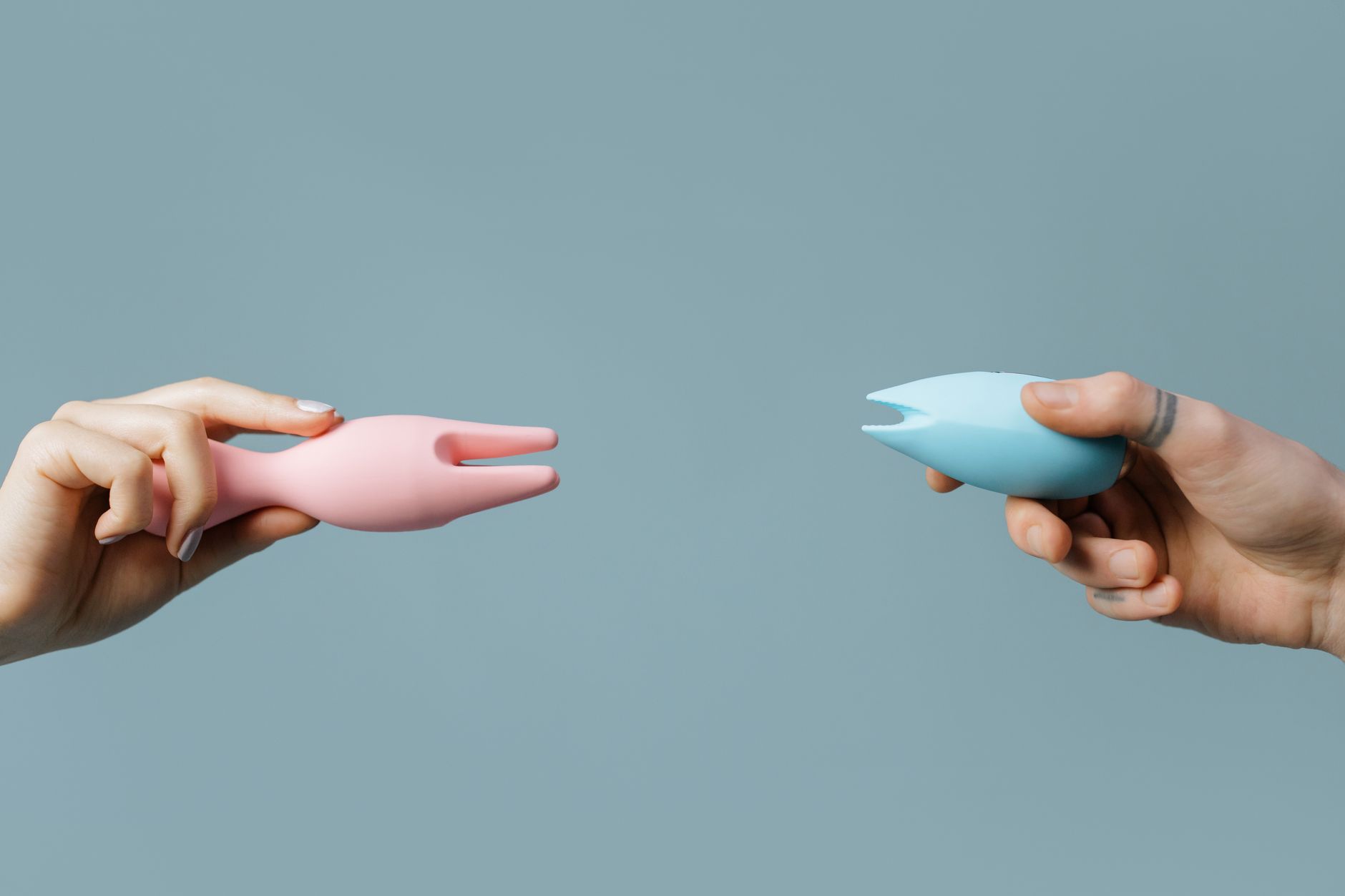
Photo by cottonbro studio on Pexels
Why the Lem works brilliantly for menopausal bodies
A lemon clitoral vibrator, especially one using suction technology like the Lem, is genuinely one of your best tools right now.
Traditional vibrators work through direct pressure and friction. After menopause, thin tissue can actually become irritated by sustained friction, especially at higher intensities. Suction-based stimulation, by contrast, works differently. It creates a gentle vacuum that engages nerve endings without grinding against sensitive tissue. This matters. A lot.
The suction action also tends to feel more sensation-rich than buzzing alone. People often describe it as feeling like a mouth, which isn't accidental. The mechanism mimics what actually worked well in bodies with more estrogen, which is why many of my clients find that once they adjust their settings, a lemon vibrator feels more intuitive post-menopause than it did before.
How to adjust your technique
You probably know how to use a vibrator in general. This is about making three specific tweaks for your menopausal body.
Start at the lowest setting. If you were using your Lem at pattern 4 or 5 before, open at pattern 1 or 2 now. This isn't forever. Your tissue will adapt. But starting low lets you feel the suction action clearly and prevents that sharp-edge sensation that thin tissue can register.
Add more warming-up time before you reach for it. Ten minutes of foreplay or solo stimulation with your hands isn't wasted time. It's essential infrastructure. Arousal brings blood flow to the clitoris, which plumps the tissue and makes stimulation feel better. A good warm-up can transform the entire experience.
Use lubrication, always. This is the most important change. Water-based lubricant isn't optional post-menopause. It removes friction, adds glide, and honestly just feels better. Some people worry that needing lube means something's wrong. Nope. It means you're being smart.
Building your ritual around this new timeline
One of the things I see shift for people after menopause is their relationship to their own pleasure. Pre-menopause sex, especially in longer relationships, often got squeezed into a compressed timeframe. Quick foreplay. Efficient orgasm. Move on.
Now you have an excuse to slow down, which is actually a gift.
Instead of thinking of your Lem routine as something you fit into ten minutes before bed, consider it a twenty to thirty minute experience. Put your phone away. This is non-negotiable. Arousal cannot build fully if your brain is scattered. Play music you like. Dim the lights. The goal is to create conditions where your nervous system feels safe enough to actually respond.
Many people find that their orgasms are more satisfying when they're more present. This is real neuroscience. Your brain is your largest sex organ. When you're actually paying attention instead of distracted, the experience intensifies. This is one area where menopause might actually be an upgrade.
What to expect in the first few weeks
You're probably not going to orgasm the first time you use your lemon vibrator post-menopause if you haven't adjusted for these changes. That's normal and not a sign that anything's broken.
The first few times are your nervous system re-learning. Your tissue is adapting to stimulation at different intensities. Your brain is remembering how to focus on sensation instead of checking emails. Give yourself four or five sessions before you evaluate whether something's working.
Many of my clients report that around session five or six, something shifts. The sensations become clearer. The path to orgasm becomes more obvious. And then, suddenly, it's better than it was before, because now they're actually tuned in.
When to loop in a partner (if that's your situation)
If you have a sexual partner, the conversation matters more than your technique adjustment.
"My body is responding differently since menopause" is a straightforward, practical statement. "I need us to reconnect after this transition" is an emotional statement. They're not the same conversation, and treating them as the same conversation creates confusion.
Talk about the physical stuff first. Tell your partner: I need more foreplay. I'm using lubricant now. I need to warm up differently. I want to take more time. These are neutral, actionable facts. Your partner can work with them.
The emotional conversation is separate. If you want to reconnect, say that. If you want to rebuild desire or intimacy, say that. But don't package it into the menopause conversation, because then you end up arguing about whether menopause is "real" instead of talking about whether you two actually want to reignite things.
Checking in with yourself after a few weeks
After your first month of adjusted technique, ask yourself these questions.
Does stimulation feel good, or does it feel numb? If you're getting no sensation at all, you might need a higher setting, a different type of toy, or a conversation with a menopause-informed GP about whether topical estrogen cream is an option for you.
Are you orgasming, and do the orgasms feel satisfying? Yes means you've found your rhythm. Not yet means give it more time, or you might need to adjust intensity or timing.
Does anything hurt? Pain is a stop sign. Genitourinary syndrome of menopause is treatable, usually with topical creams that have minimal systemic absorption. Don't just accept pain as inevitable. It's not.
Are you enjoying the longer timeframe, or does it feel like a burden? If menopause has given you permission to spend thirty minutes on your own pleasure and that feels amazing, lean into it. If it feels like obligation, that's different information. Maybe you're trying to force something that actually needs more healing time, or maybe your desires have shifted and that's okay too.
The menopause advantage nobody talks about
Here's something I see happen repeatedly in my practice: people hit menopause, adjust their technique, give themselves permission to explore differently, and discover orgasms they never had access to before.
This isn't magical thinking. It's because you're finally not contending with wildly cycling hormones. Your brain is clearer. The social pressure to perform a certain way has often lifted. You're using a device like the Lem that was engineered for sophisticated, precise stimulation. And you're actually paying attention.
For a lot of women I work with, their best sexual experiences haven't been in their twenties or thirties. They've been in their fifties and sixties, post-menopause, when they finally knew what they actually wanted and had the confidence to ask for it.
That can be you too. Menopause isn't an ending. It's a plot twist.
FAQ: Your menopause and Lem questions answered
Can I still use a lemon vibrator if my tissue is really sensitive or thin?
Yes, and it's often better than other options. Suction vibrators like the Lem distribute stimulation differently than direct pressure vibrators. Thin tissue responds better to the suction action than to vibration alone. Start at the lowest setting, use lubricant, and take your time warming up. If you experience pain, that's worth discussing with a menopause-informed doctor. Topical estrogen can help with tissue thickness if sensitivity is extreme.
Does menopause permanently change how orgasms feel?
Yes and no. Your neurology doesn't change, so your capacity for pleasure is still there. But the physical mechanism shifts because tissue and hormones shifted. Most people adapt within a few weeks and find that orgasms feel different but equally satisfying. Some find them better because they're actually paying attention. Expect a recalibration period, not a permanent loss.
How much lubrication should I use with a lemon clitoral vibrator?
Enough that the toy glides smoothly without dragging. You don't need to be drenched. A thin, even layer is plenty. Reapply if things feel sticky or dry. Water-based lubricant is your friend. Silicone lube feels richer, but it can damage silicone toys over time, so stick with water-based. Some people keep it nearby and reapply every five minutes during longer sessions.
Will hormone replacement therapy change how my vibrator feels?
Possibly. If you start HRT, your tissue will gradually thicken and hydrate again over weeks or months. You might find that you can use higher intensity levels, or that stimulation feels different. This isn't bad. It just means you'll adjust again. Some people stay on HRT long-term. Others use it short-term to get through the transition and then adjust their vibrator technique for their post-HRT body. Either path is fine.
Is it normal that my partner seems less interested now that I'm menopausal?
It's common, but not inevitable. Some partners assume menopause means the end of sex, so they stop initiating. Some get confused by the physical changes. Some are dealing with their own midlife transitions. Have a direct conversation that's separate from your own pleasure exploration. If you want to reconnect with your partner, that's a conversation worth having. If your partner isn't interested, that's real information too, and it's worth examining.
Should I be using the Lem differently than I used it before menopause?
Yes, at least at first. Start lower, use lube, give yourself longer to warm up. After a few weeks, you might find you can gradually increase intensity or shorten foreplay. Listen to your body. Everyone's adjustment timeline is different. There's no right speed for this adaptation.
The takeaway
Menopause changes how you experience pleasure. It doesn't end pleasure. Your clitoris is still there. Your nerves are still there. Your brain still lights up the same way when you're aroused. What changed is the access point, and access points can be adjusted.
A lemon vibrator, especially one built on suction technology, is genuinely excellent for post-menopausal pleasure because it works with your body's new reality instead of fighting it. Slower warm-up, more lubrication, lower starting intensity, and actual presence and attention. That's the formula.
You're not broken. You're not past your prime. You're just operating with new instructions. And honestly, following better instructions might be exactly what your pleasure needed.
Related reading
If you're rebuilding after menopause, these posts from Hallo Nancy Lemon offer more specific scenarios:
How to Use a Lemon Vibrator When Your Body Takes Longer to Become Aroused covers the timing shifts in detail.
How to Use a Lemon Vibrator for Pleasure During Perimenopause walks through the transition period specifically.
And if you're reconnecting with a partner through this, How to Use a Lemon Vibrator When Partners Reconnect After Time Spent Apart addresses that dynamic.
Your pleasure matters. Menopause didn't change that.