When distance becomes the third person in your relationship
Let's be real. You haven't had sex in months. Maybe a year. Maybe longer. Long enough that you're not entirely sure how your bodies are supposed to fit together anymore. Long enough that the thought of being naked in front of each other feels more vulnerable than it ever did before, even though this person has seen you completely undone.
That's not failure. That's just what happens when time and circumstance wedge themselves between two people. The nervous system forgets the rhythm. The brain starts narrating instead of experiencing. And suddenly an act that used to be easy feels like a conversation in a language you haven't spoken in years.
Here's what I know from twenty years of working with couples: reconnection doesn't begin with sex. It begins with permission to be awkward. And tools like a Lemon vibrator can actually make that awkwardness dissolve faster than you'd expect, because they give you both something to focus on besides your own anxiety.
Why touching each other again feels like starting over
It actually is starting over, neurologically speaking. Your nervous system has spent months or years in a certain state without this person. When you reunite, that system has to recalibrate. Touch that used to feel neutral now feels charged. Touch that used to feel natural now feels tentative.
I see this constantly in couples who've been apart due to work, illness, military deployment, or relocation. The first time they're together, they expect desire to snap back like a rubber band. Instead they get confusion. Sometimes arousal doesn't happen the way it used to. Sometimes it happens all at once and feels overwhelming. Sometimes there's shame about the gap, which is maybe the worst roadblock because it makes you hide rather than explore.
The other piece: your bodies have changed. Muscles have shifted. Sensitivity patterns have evolved. What felt incredible two years ago might need adjustment now. This isn't a problem until you treat it like one. A vibrator gives you a framework for discovering what feels good now instead of chasing what felt good then.
Setting the actual foundation (before clothes come off)
If you're planning to reconnect physically after an extended gap, start here.
Talk about it when you're not about to have sex. This is the hardest rule and the most important one. Sit down on the couch. Make tea. Have the boring conversation about nerves, expectations, and what you both need to feel safe. Say the weird stuff out loud. "I'm worried I won't know what to do." "I'm scared you won't want me anymore." "I don't even know if I remember how this works." These sentences feel humiliating and they're actually magic. They destroy the fantasy that sex should just happen. It gives you permission to make it intentional instead.
Agree on a pace that feels possible. Not a plan. A pace. "We're going to take it slow and check in with each other," not "We're going to have sex on Friday." One makes you both partners. The other makes you both performers.
Decide on your tool in advance. Don't introduce a vibrator for the first time when you're already vulnerable. If you've never used a Lemon vibrator or any clitoral vibrator together, talk about it beforehand. "I'm thinking of using the vibrator because I want to feel good and I also want to take some pressure off myself. Does that feel okay to you?" This prevents the shock of a new object in an already fragile moment.
How a clitoral vibrator changes the dynamic when you're nervous
Here's the thing that surprises most couples: introducing a vibrator isn't about replacing your partner. It's about diluting the intensity of expectation long enough for you both to remember what pleasure actually feels like.
When you're reconnecting after months apart, there's often pressure (spoken or not) for the first encounter to be meaningful, connected, passionate. Sometimes it needs to be. Sometimes it just needs to not suck. A vibrator gives you a lane where you can experience pleasure without that pressure being entirely on your partner to provide it. You're giving yourself sensation. They're giving you attention. That's a much gentler place to start than trying to rebuild synchronized desire from scratch.
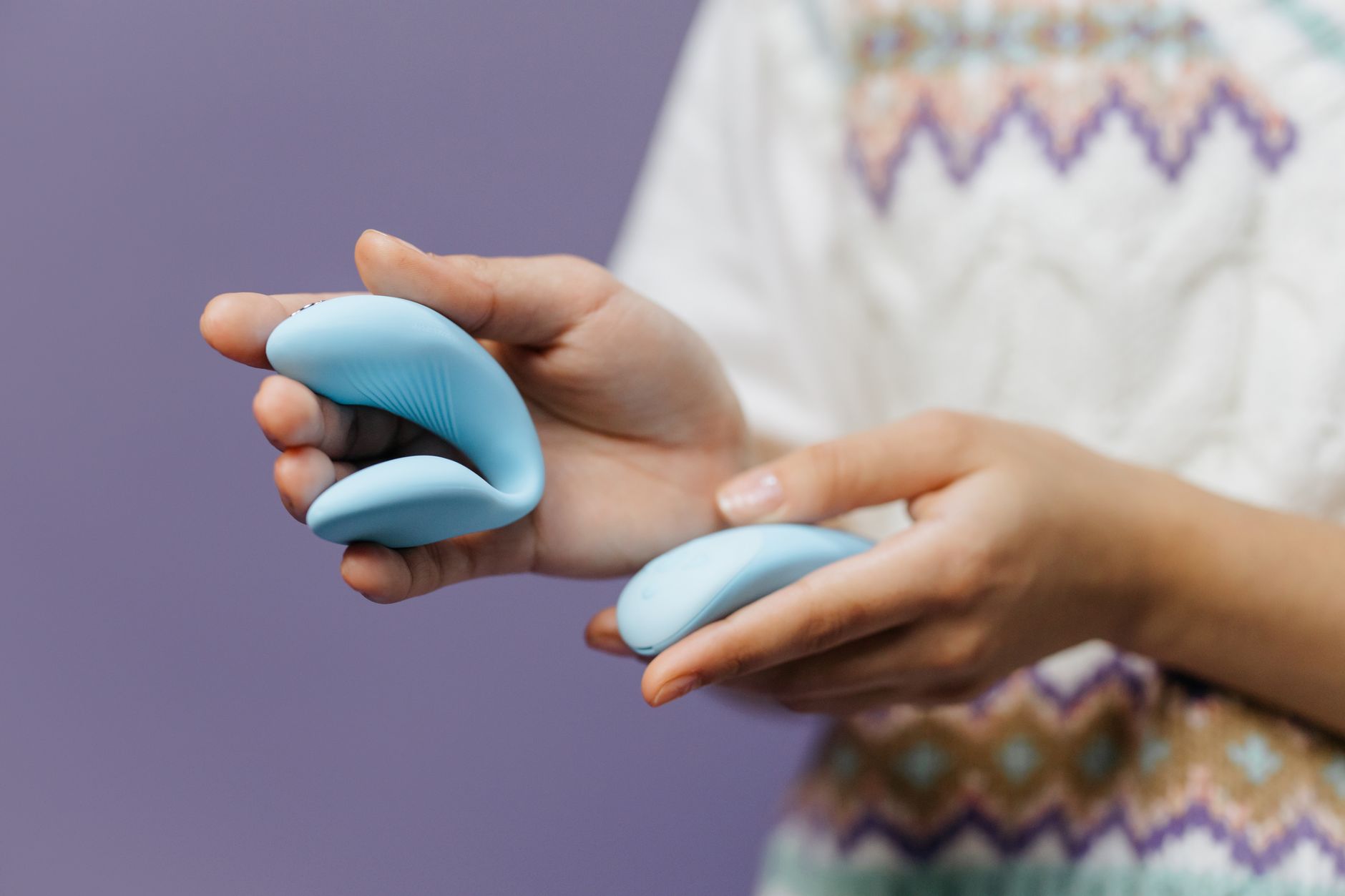
Photo by cottonbro studio on Pexels
The actual first time using the vibrator together
Don't make it a performance. Make it an experiment.
Start clothed. Sit next to each other. Use the vibrator on yourself, fully dressed, just to remind your nervous system what the sensation is. This sounds silly but it matters because it strips away the idea that this is a Big Moment. It's just a tool. It has a power button. You can turn it off anytime.
Move to skin gradually. If you're using the Lem, start with the suction on a low pattern (1 or 2) over underwear. The sensation is gentler that way and gives you both time to adjust to the fact that you're doing this together. If your partner is touching you elsewhere, that's even better. Not to "help with arousal" but just to have them present. A hand on your waist. Fingers in your hair. Something that says, "I'm here with you."
Take your time. The whole point of reconnecting after distance is that you don't have to rush. If you're used to clitoral stimulation that's firm and fast, you might actually need to ease back into that. Your nervous system is already in high alert. A gentler build gives you space to actually feel pleasure instead of just chasing it.
When pleasure doesn't show up (and why that's okay)
Honestly, you might not come the first time. You might feel frustrated or numb or weirdly emotional. All of that is normal after a long gap. Your body is being asked to trust again in a way it hasn't for a while.
If numbness happens, resist the urge to increase intensity immediately. Instead, pause. Have your partner touch you somewhere else. Switch positions. Move around the room. Sensation returns faster when you stop chasing it.
If emotion comes up, let it. You've been apart. This is intimate and vulnerable and it matters. The vibrator doesn't make that less true. It just gives you a framework where you can feel those things while also feeling pleasure, which is actually the healthiest possible outcome.
Building a new rhythm that's actually yours
After the first reconnection, the work becomes about discovering what turns you both on now, not trying to resurrect what turned you on before.
This is where lemon clitoral vibrators earn their place in your toolkit. They're precise enough that you can explore different patterns and intensities without the guesswork of hands alone. Your partner can watch you use it, which lets them see what you actually respond to in real time. You can show them. "This pattern feels good," "I want the intensity a bit lower," "I like it when you kiss my neck at the same time."
These micro-communications rebuild intimacy faster than anything else. Not because they're inherently sexy, but because they're vulnerable. You're telling your partner exactly what your body needs. After months of silence, that's everything.
Managing the guilt that might show up
Some couples carry guilt about the time apart. "I should have fought harder to stay connected," "I should have initiated more." This guilt can poison reconnection because it makes sex feel like a debt instead of a choice.
Let me be clear: you don't owe anyone sex. Not even your partner. If you're using a vibrator during reconnection, it should feel optional and good, not like an obligation you're trying to fulfill.
If guilt is present, name it separately from your sexual reconnection. "I feel sad about the time we lost," is a different conversation than "Let's be intimate tonight." Give both conversations space to exist. The vibrator actually helps with the second conversation because it takes some of the weight off both of you. You're exploring together instead of trying to fix something broken.
Questions people ask about reconnecting with vibrators
Can using a vibrator make my partner feel less needed during reconnection?
This comes up constantly and the answer matters. A vibrator doesn't replace your partner. It complements them. You're still naked together. You're still vulnerable together. You're still present. The vibrator is just making the pleasure part easier to access when nerves have made that harder. Many couples find that using a clitoral vibrator together actually deepens intimacy because it removes the pressure for penetration or manual stimulation to be the entire event.
How do I suggest a vibrator to my partner without making it weird?
You probably can't make it not weird, and that's fine. Weird is temporary. The conversation is the weirdness, not the vibrator. Talk about it plainly: "I'm nervous about reconnecting and I think a vibrator might help me relax. Does that sound okay to you?" Most partners feel relief when someone suggests a tool because it means they don't have to be the sole source of pleasure right now.
What if my partner wants to use it but I don't?
That's completely valid. Your partner should have space to explore their own pleasure too. This can actually help with reconnection because you're each giving yourselves permission to feel good, which usually makes it easier to be present for each other. You can be present without participating in the exact same act.
Should we use it every time we're intimate after reconnecting?
No. The goal of reconnection is to rebuild the ability to be intimate without tools. A vibrator is helpful in the beginning when nerves are high and touch feels unfamiliar. As your confidence returns, you might use it less. Or you might keep it around because it feels good. Either way is fine. There's no timeline for when you "graduate" from tools to "real" sex, because tools and sex aren't opposite things.
How long does reconnection usually take?
This varies wildly depending on how long you were apart, why you were apart, and what damage needs healing. Some couples need three or four intimate encounters before they feel genuinely connected again. Some need weeks. Be patient with yourself and each other. Reconnection isn't about getting back to where you were. It's about building something that works for who you are now.
What if I'm still not feeling arousal after several attempts?
If arousal isn't returning after a few reconnection attempts, that might signal something beyond nerves. It could be hormonal, stress-related, or emotional. It could mean there's more relational work to do before sexual reconnection is possible. This is worth exploring with a therapist. A vibrator is a tool for pleasure, not a fix for deeper intimacy issues. If those exist, they need addressing separately.
The part no one tells you
After months or years apart, reconnection often gets easier than you expect once you give yourself permission to be bad at it. The first time is awkward. The second time is less awkward. By the fourth or fifth time, your bodies remember. Muscle memory is real. So is nervous system memory. Your partner knows you. You know them. You're just reintroducing each other.
A Lemon clitoral vibrator isn't about fixing your reconnection. It's about giving you both a way to access pleasure and presence without the weight of performance. That's the whole thing. That's the magic. Not the vibrator itself, but the permission it gives you to explore your bodies and your desires as they are right now, not as they were before distance happened.
Reconnection is possible. Desire returns. And sometimes the best tool for getting there is something as simple and honest as a lemon vibrator and a conversation about how nervous you both are. If you want to dig deeper into rebuilding intimacy after time apart, we have resources on how to approach sex after years of avoidance that might help. And if awkwardness around pleasure itself is the real barrier, explore ways to ease into pleasure when shyness gets in the way.