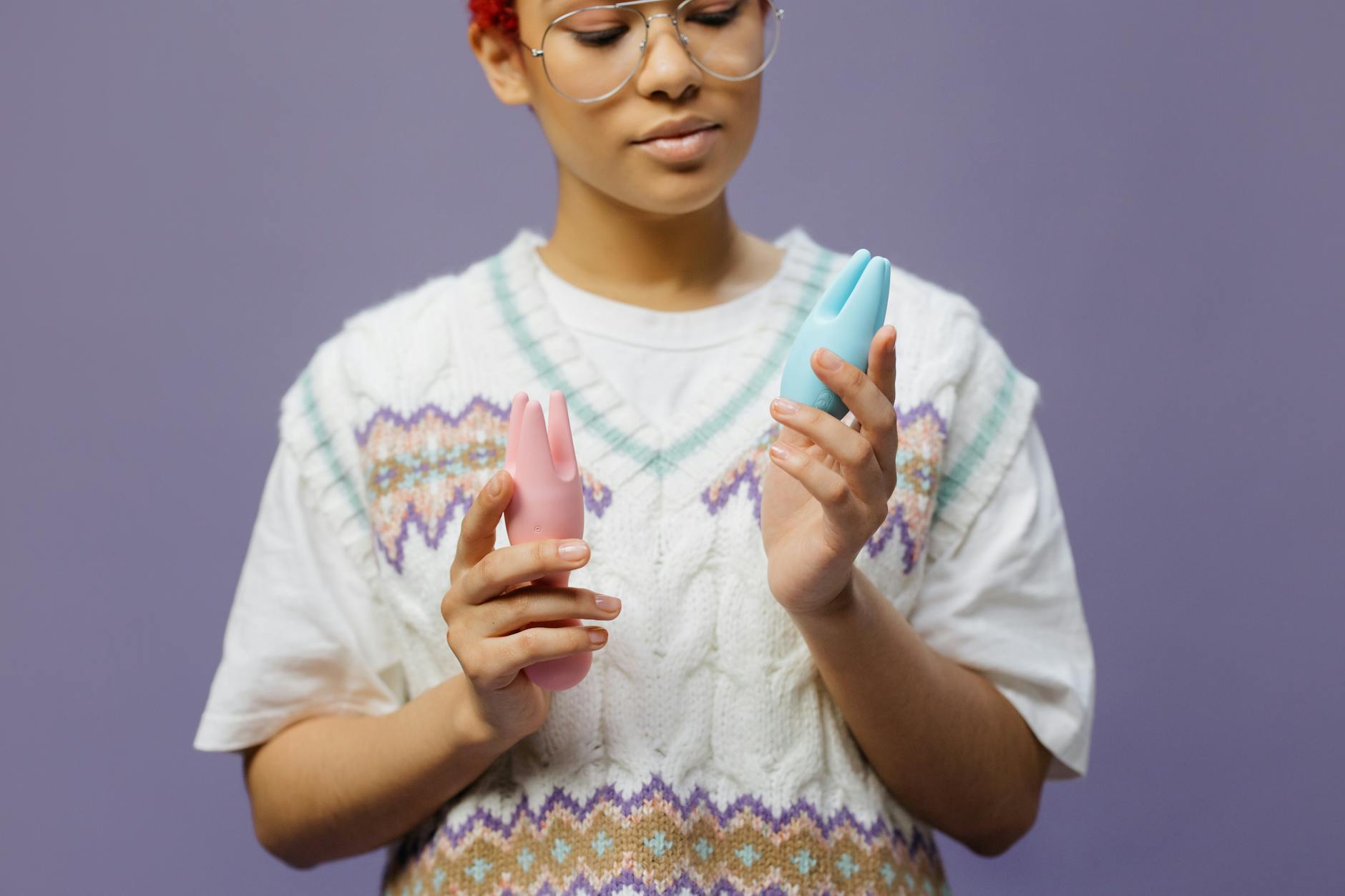
Let's talk about perimenopause and pleasure
Perimenopause is not menopause. This distinction matters because the two feel wildly different. Where menopause is relatively stable (estrogen stays low), perimenopause is a decade-long hormonal roller coaster. One month your body responds like it always has. The next month, arousal takes twice as long. Your clitoris feels more sensitive. Or less. Or both, depending on the week.
This is the part nobody explains clearly. You're not broken. You're not losing your mind. Your body is in active transition, and a tool like the Lem—a lemon clitoral vibrator designed specifically for external stimulation—can actually become more valuable during perimenopause than it was before, once you understand how to work with your changing sensations.
Here's what actually happens physiologically and what you can do about it.
The perimenopause shift is different from full menopause
Estrogen and progesterone fluctuate wildly in perimenopause. Some months they spike; other months they plummet. This affects arousal in unpredictable ways. Your pelvic blood flow changes month to month. Your clitoral tissue stays responsive, but the pathway to arousal becomes less direct.
There's also a psychological layer. If you're in your 40s during perimenopause, you're likely managing career stress, aging parents, relationship rhythms, and a shifting sense of your own desirability. The body doesn't separate physical sensation from emotional context. That matters.
Here's what doesn't change: your clitoral nerve density, your brain's capacity for pleasure, or your ability to reach orgasm. Many people find their most intense orgasms of their lives during perimenopause because they finally stop waiting for it to happen to them and start creating it intentionally.
Why suction-based stimulation works better right now
A lemon vibrator like the Lem uses air-suction technology. This is not the same as traditional vibration. Instead of friction against tissue, it creates a gentle rhythmic pulse and slight suction. During perimenopause, this matters more than you'd think.
When estrogen levels drop, even temporarily, clitoral tissue becomes thinner and more sensitive. Direct, intense vibration can feel overwhelming or even numb out sensation. Suction-based stimulation provides intense stimulation without harsh friction. You get stronger sensation with gentler contact. For a body in flux, this is a real advantage.
The Lem also works particularly well because you can control the intensity in incremental steps. Perimenopause requires flexibility. Some weeks you'll want to start at pattern 3 and build. Other weeks you might skip straight to 5. Having a device that lets you match your current body state, rather than forcing your body to match the device, changes everything.
Mapping your cycle, even when it's erratic
One of the first things I recommend to clients navigating perimenopause is tracking their arousal alongside their cycle. Yes, your cycle is probably chaotic right now. Track it anyway. You'll start to notice patterns even within the chaos.
In the first half of your cycle, when estrogen is higher, arousal typically comes faster and sensation feels more diffuse. This is a good time to experiment with longer warm-up sessions and varied patterns on your lemon clitoral vibrator. Shorter bursts of intensity, longer rest periods, more time building gradually.
In the second half, when estrogen drops and progesterone climbs, your arousal might feel more concentrated in a specific area. Your clitoris might feel either more or less sensitive. This is when you might prefer starting with a lower intensity and moving up methodically, or staying at one intensity level longer. The key is observing without judgment what's actually happening, then adjusting accordingly.
Over three to four months of tracking, you'll have a map. It won't be perfect—perimenopause is unpredictable—but having even rough categories helps you stop blaming yourself and start working with what's actually true.
Timing and foreplay when arousal takes longer
One of the most consistent changes people report during perimenopause is that arousal takes longer. This isn't a deficit. It's a signal to expand what counts as foreplay.
Where you might have spent 10 minutes warming up in your 30s, you might now need 20 to 30 minutes. This isn't failure. It's data. Budget accordingly. When using a lemon vibrator during perimenopause, I suggest starting with non-genital touch for at least 10 minutes: neck, inner thighs, chest, belly. Then move to indirect clitoral touch—touching the area around the clitoris rather than directly on it—for another 5 to 10 minutes before introducing the Lem itself.
Once you're using the lemon clitoral vibrator, start at the lowest intensity. Many people find that lower patterns on the Lem during perimenopause feel more pleasurable than higher patterns would have before, precisely because the stimulation builds gradually and gives your nervous system time to respond.
Patience stops being frustrating when you reframe longer arousal as more foreplay, not less efficiency. Your pleasure isn't slower. It's more intentional.
Lubrication and comfort as perimenopause progresses
Perimenopausal bodies produce less lubrication, though not as severely as fully post-menopausal bodies. Still, adding external lube often makes a difference—not because something is wrong with you, but because even minor dryness changes the glide and sensation of external touch.
Use water-based lube with the Lem. It's silicone-safe, mixes naturally with your own lubrication, and won't degrade the device over time. A small amount—roughly the size of a pea—is enough. You can reapply if needed.
For some people, the sensation of lube itself becomes part of arousal. For others, it feels like an interruption. Experiment. If lube gets in the way, try a very light amount applied to your fingers before touching the area rather than directly to the Lem itself.
Pattern-switching and overstimulation during perimenopause
One weird thing that happens during perimenopause: your clitoris can go from under-responsive to over-responsive within the same session. This is because blood flow to the area shifts as you become more aroused, and your hormones are already making tissue more sensitive.
This means pattern-switching becomes a key skill. As you use your lemon vibrator, stay aware of sensation. If intensity suddenly feels too strong, don't white-knuckle it—drop down a pattern level. If you feel numbing happening, pause entirely for 30 seconds. Let sensation reset. Then return at a lower intensity.
The Lem's graduated intensity patterns actually support this perfectly. You're not locked into one speed. If you start at pattern 2, build to pattern 4, then drop back to pattern 3 for the home stretch, that's all accessible within the same session. Work with your nervous system, not against it.
When to see a doctor during perimenopause
If arousal completely disappears and stays gone for more than a few weeks, talk to a gynecologist or menopause specialist. That's worth investigating, and there are often solutions—from minor lifestyle shifts to hormone testing if needed.
If sensation changes are accompanied by pain, bleeding, or discharge outside your normal pattern, that also warrants a check-up. Perimenopause can mask other things, and you deserve clarity.
But if your experience is shifting arousal, changing sensation timing, and occasionally feeling less responsive? That's textbook perimenopause. It's not permanent. And a device that lets you adapt to whatever your body needs this month takes the guesswork out of pleasure.
FAQ: Your perimenopause and pleasure questions answered
Is it normal for arousal to feel different every month during perimenopause?
Completely normal. Your hormone levels are genuinely fluctuating every few weeks, so your body's response to stimulation will too. Some weeks you'll feel more responsive; other weeks, less so. This isn't inconsistency. It's perimenopause being perimenopause. A tool that adapts—like a lemon clitoral vibrator with adjustable intensity—helps you meet your body where it is rather than waiting for it to return to a single