
Let's name the actual problem
You want sex. Your partner doesn't. Not as often, not with the same urgency, not with the same intensity. This is one of the most common relationship friction points I see in my practice, and it's also one of the most mishandled.
Here's what usually happens: one partner treats it as a rejection (it feels personal). The other partner treats it as pressure (it feels like an obligation). Then you both stop talking about it and pretend the gap doesn't exist. Spoiler alert: it gets wider.
Why this happens (and why it's not what you think)
Desire mismatch rarely means incompatibility. It means your partner's body or brain has a different baseline. Maybe they're stressed, tired, or their medication changed. Maybe they've never had a high sex drive, and the relationship worked fine until you suddenly needed more. Maybe they're stuck in a cycle of obligation that killed their spontaneous desire.
The key insight: lower sex drive doesn't mean lower pleasure capacity. Those are two completely different systems. Someone might want sex once a week but have the most intense orgasms of their life when it does happen. Someone else might want it five times a week but never quite get there.
When you introduce a lemon vibrator into this dynamic, you're not trying to "fix" your partner. You're creating a third option.
The third option: independent pleasure that reconnects you
Here's what changes when you own your pleasure separately from your partner's availability.
Instead of waiting for your partner's desire to match yours, you meet your own needs. But you do it in a way that keeps you emotionally close. That might mean:
Using the Lem while they're in the room but doing their own thing. This sounds weird if you've never tried it. It's not. It's actually one of the most intimate variations I recommend. Your partner reads, works, or just sits with you. You use your lemon vibrator. They see that you're taking care of yourself, not blaming them. You're not resentful. You're not ashamed. You're just... handling it.
Building a shared ritual around your independent pleasure. Some couples I work with have a standing "Sunday morning" where one partner uses the Lem while the other makes coffee and they talk about the week. It reframes solo pleasure as part of the relationship fabric, not a workaround.
Asking them to participate in ways that don't drain their bandwidth. "I'd love it if you held me after" or "Would you kiss me while I use this?" are real requests that require minimal effort but maximum emotional presence.
How the Lem specifically helps this dynamic
Air-suction clitoral vibrators like the Lem from Hallo Nancy Lemon work brilliantly for desire mismatch because they don't require your partner to do anything. No penetration, no rhythm matching, no worry about whether they're performing well enough. You control the intensity, the duration, and the outcome.
Many of my clients report that using a lemon clitoral vibrator when their partner has lower sex drive actually relieves the pressure on both sides. The higher-desire partner gets the physical release they need. The lower-desire partner doesn't feel obligated to perform.
The lem vibrator also tends to deliver orgasms faster and more reliably than partnered sex when desire levels are mismatched. Why? Because you know exactly what you want and you're not managing anyone else's experience.
The conversation you actually need to have
Here's where most couples fail: they try to use the vibrator without ever saying what they're really thinking.
You need to separate two conversations:
Conversation 1: The logistics. "I want sex more often than you do. That's not going to change. I'm going to meet some of that need with a vibrator. I want to do it in a way that feels connected to you, not like I'm hiding in the bathroom."
Conversation 2: The feelings underneath. This is trickier. Maybe you feel rejected. Maybe they feel pressured. Maybe there's resentment on both sides. You can't solve this with a vibrator. You might need a therapist, honestly. But you can't move forward without naming it.
When I coach couples through this, the turning point usually comes when the lower-desire partner realizes they don't have to fix the problem alone. Your pleasure is your responsibility, not theirs.
What to actually do, week by week
Week 1: Buy the vibrator and don't use it yet. Just have it in the house. Let your partner know it's there. No big announcement needed. "I got something that might help. We can talk about it whenever." Let the novelty settle.
Week 2: Use it alone first. Get comfortable with it. Learn what settings work. This is not about performance or showing your partner anything. This is purely for you.
Week 3: Try it with your partner present but not involved. You're in the same room. They don't have to watch or participate. They're just... there. Notice how it feels. Does the pressure ease?
Week 4: Ask for minimal participation. "Would you hold my hand?" or "Would you kiss me?" The physical contact keeps you emotionally linked.
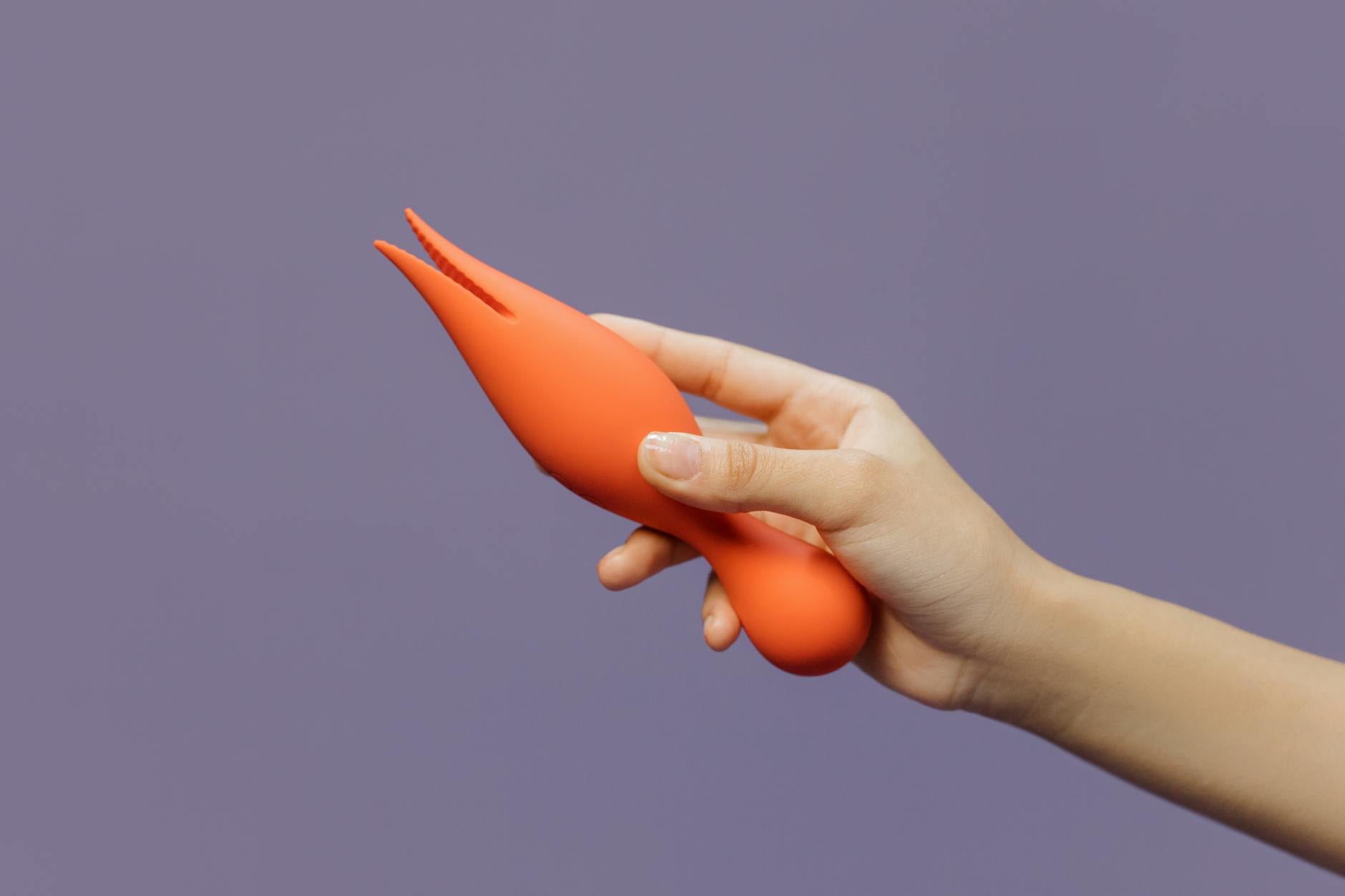
Photo by cottonbro studio on Pexels
When desire mismatch is actually pointing at something else
If your partner's sex drive dropped suddenly, that's worth investigating. New antidepressants? Work stress? Relationship conflict they haven't named? Those need addressing, not just managing around.
If the mismatch has always existed and you're just now hitting it, that's a different conversation. Can you live with this difference long-term? Many couples can. Many can't. Both answers are valid.
But if it's a chronic pattern where one partner feels trapped in obligation and the other feels constantly rejected, that's the point where individual pleasure tools stop being enough. You need deeper work on what's underneath.
The paradox that actually works
Here's what surprises most couples: when the higher-desire partner stops waiting for permission and takes care of their own pleasure, the lower-desire partner often becomes more interested in sex. Not always. But often.
Why? Because you stopped transmitting resentment. Because they stopped feeling like they're failing you. Because the stakes lowered. When you're anxious about being enough, desire tanks. When you relax into your own pace, it sometimes returns.
The lemon vibrator becomes a bridge, not a workaround.
When to seek additional support
If desire mismatch is destroying your emotional connection, a relationship therapist trained in sex-positive work is worth the investment. If one partner is using a vibrator as an escape rather than a solution, that's also worth exploring.
But if you're just trying to manage different sex drives in an otherwise solid relationship? A vibrator, clear communication, and realistic expectations can genuinely change everything.
FAQ: Desire Mismatch and Your Lemon Vibrator
Is it okay to use a vibrator when my partner wants less sex than I do?
Completely. Your pleasure is not their responsibility. Using a lemon vibrator to meet your own sexual needs is self-care, not infidelity. It's also often less stressful for the lower-desire partner because they don't feel obligated to perform.
Will using a vibrator make my partner feel inadequate?
It might, initially. But only if you don't talk about it first. Framing it as "I'm taking care of myself so we can both relax" instead of "You're not enough" makes a massive difference. The lem vibrator isn't replacing them. It's removing pressure from both of you.
Should my partner watch me use the vibrator?
That depends entirely on what feels right to you both. Some couples find it incredibly connecting. Others find it awkward. Some start with you alone and progress to shared presence over time. There's no "should."
What if my partner gets jealous of the vibrator?
That's usually about something else. Jealousy of an object often masks insecurity about being enough. Name that directly: "This isn't about you. I need this release, and it has nothing to do with how I feel about you." If it persists, that's worth exploring in couple's therapy.
Can a lemon clitoral vibrator replace physical intimacy with my partner?
No, and that's not the goal. A vibrator handles one specific need: orgasm. It doesn't replace emotional connection, conversation, or physical touch. If you're using it as a substitute for intimacy rather than a complement to it, you might be managing a bigger relationship problem that needs attention.
How often is it healthy to use a vibrator when partners have different sex drives?
As often as you need to. Frequency depends on your body, your stress, and your relationship. Some people use their lem vibrator daily. Others once a week. There's no number that's "right." What matters is whether it's reducing resentment and increasing connection.
The real fix
Desire mismatch isn't a vibrator problem. It's a communication problem. The vibrator just makes the conversation easier because you're not dependent on your partner's body cooperating anymore. You can actually listen to what's underneath the mismatch instead of just fighting about frequency.
When that shift happens, everything changes. The pressure lifts. Your partner stops performing. You stop resenting. And sometimes, they actually want more sex because it's not obligatory anymore.
If you want to explore how air-suction clitoral vibrators fit into your specific dynamic, or if you're navigating multiple relationship friction points at once, reach out to talk through your situation. That's what I'm here for.