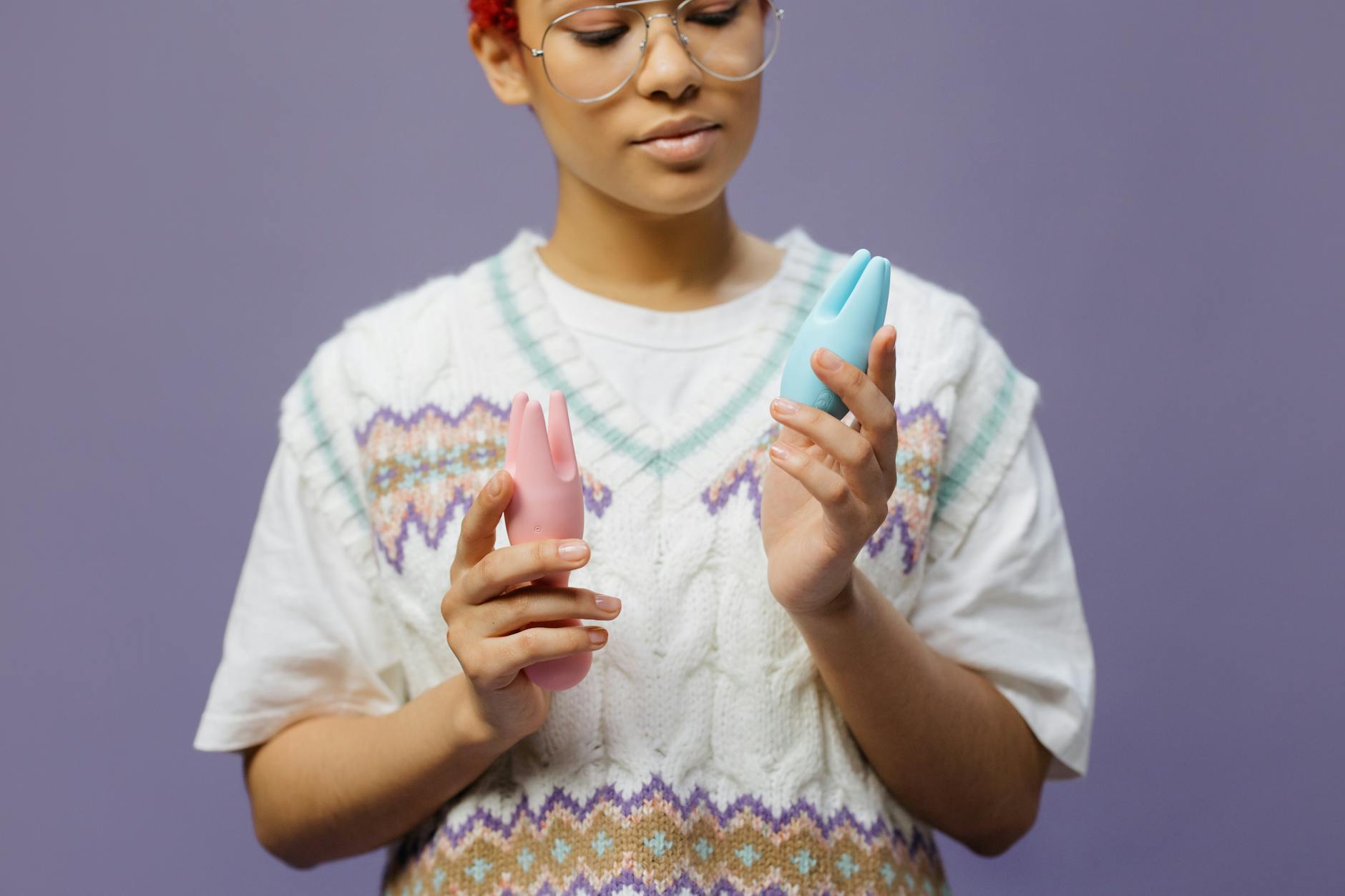
Let's be real about anxiety and arousal
Anxiety is basically your nervous system's overactive bouncer. It decides something is a threat, sounds the alarm, and floods your body with cortisol and adrenaline. Your clitoris, meanwhile, is waiting in the VIP section wondering why the door guy won't let it come out to play.
When anxiety is in charge, sexual pleasure isn't just difficult. It's neurologically offline. Your parasympathetic nervous system (the one that handles "rest and digest" and arousal) literally cannot activate while your sympathetic nervous system (the fight-or-flight one) is running the show. This isn't a willpower problem. This isn't you being broken. This is basic neurobiology.
The good news? You can interrupt that pattern. And tools like a lemon clitoral vibrator become far more useful once you understand what your body actually needs first.
Why anxiety shuts down arousal
Here's the chain reaction. Your brain perceives a threat. Could be a deadline, a relationship tension, a health worry, work stress, or even just the pressure to perform sexually. Your amygdala fires up, flooding your system with stress hormones. Blood flows away from your genitals and toward your large muscles (so you can fight or run). Your vaginal tissue doesn't lubricate because lubrication is a non-essential function when your brain thinks you're in danger.
Meanwhile, your clitoris is starved of the increased blood flow it needs to swell and become sensitive. Sensation feels muted. Touch that would normally feel good feels irritating. And the harder you try to push through it, the more frustrated and anxious you become. Now you've got a loop.
The Lem and other clitoral vibrators can absolutely help here. But only after you've done something crucial first: you've got to actually calm your nervous system down. You can't vibrate your way out of fight-or-flight mode.
The nervous system reset (do this before touch)
Your job isn't to force arousal. It's to give your parasympathetic nervous system permission to activate. Three things work for most people.
1. Vagal toning through breath. Your vagus nerve is like the master switch. Slow, deep breathing activates it. Try box breathing: inhale for four counts, hold for four, exhale for four, hold for four. Do this for three to five minutes before any touch. You're not breathing to relax (that's psychological). You're sending a signal to your nervous system that you're safe. The physiological shift happens without effort.
2. Temperature and comfort. Your body needs physical permission to relax. Warm your space, use blankets, wear clothes you actually enjoy. Some people need to move first. A ten-minute walk, gentle stretching, or dancing to one song shifts the nervous system state more effectively than lying still trying to "get in the mood."
3. Removing the audience (even the imaginary one). Anxiety often includes a layer of performance pressure. You're worried about being good enough, finishing fast enough, responding dramatically enough. Kill that. Put your phone on silent. Close the door. Tell your partner explicitly: "I need twenty minutes with no expectations. No pressure to come, no pressure to respond, no judgment." Usually this alone reduces anxiety by half.
When you're ready to use a lemon vibrator
Once your nervous system has actually calmed down (you'll feel it. Your shoulders will drop. Your jaw will unlock. You'll notice your breath getting slower), now tools like the Lem become genuinely useful.
Start with the lowest pattern. Anxiety often leaves your clitoris hypersensitive or numb, sometimes switching between the two. Very low intensity lets you feel what's actually happening without overwhelming yourself. The Lem's suction-based stimulation is particularly good here because it spreads sensation across a wider area instead of concentrating it in one point. That distributed sensation often feels more accessible when your nervous system is still slightly activated.
One pattern you might not expect to work well: the pattern that feels almost boring. When anxiety is present, some people find that a very gentle, repetitive pattern actually lets the nervous system calm further. There's no stimulation-seeking energy. There's just a steady, predictable sensation that signals safety. Your body can then relax into it.
The attention redirect technique
Here's something counterintuitive. If you're using a lemon clitoral vibrator and you find yourself spiraling into anxious thoughts mid-pleasure, don't try harder to focus on the sensation. That creates pressure, which creates more anxiety.
Instead, redirect your attention deliberately. Notice five things you can see. Four things you can physically feel (the blanket, the air, your breath). Three things you can hear. Two things you can smell. One thing you can taste. This isn't about being present in a spiritual way. It's about redirecting your nervous system's attention from the threat-scanner in your brain to actual sensory input. It takes about ninety seconds. Your arousal will often restart without effort afterward.
Building the buffer zone
If anxiety regularly shows up during pleasure, you need a buffer zone. This means deliberately downregulating your nervous system during the day, not just during sex. When your nervous system is already running hot from work stress or relationship tension, even a small amount of anxiety can short-circuit arousal.
What actually works? Movement. A thirty-minute walk hits differently than trying to meditate if you have an active nervous system. Cold water on your face for ten seconds (the mammalian dive response). Talking to a friend about the stress so it's not running in your background. Some people genuinely benefit from therapy specifically for anxiety, whether that's talk therapy or somatic experiencing or something else.
The lem vibrator and other clitoral vibrators work best when you're not fighting your own nervous system to use them.
When to involve your partner
If you're in a relationship and anxiety is interfering with pleasure, there's a conversation that needs to happen. Not during sex. Not when you're already frustrated. When you're both calm and have thirty minutes.
Here's what to say: "My anxiety is interfering with arousal. It's not about you or about how I feel about you. It's my nervous system being overactive. Here's what I need: less pressure to perform, more time to warm up, and explicit reassurance that there's no expectation for any particular outcome."
This is not the conversation to have if your partner responds defensively or makes it about them. If they do, that's actually important information about the relationship dynamic, and you might benefit from working with a therapist on that separately.
Most good partners respond to clarity. "I need you to initiate less frequently for a while" or "I need us to spend ten minutes just cuddling with no sexual intention" or "I need you to say out loud that there's no expectation" feel manageable. Vague frustration about not wanting sex feels like rejection.
The anxiety-specific settings for clitoral vibrators
If you're using a lem vibrator or similar tool, experiment with these patterns specifically when anxiety is present.
Start with the slowest, most rhythmic pattern available. Not the most intense. Not the most varied. The one that feels almost meditative. Use it for five to seven minutes without any goal. You're not trying to orgasm. You're training your body that this tool feels safe.
Most people find that gentle, consistent sensation actually helps anxiety more than variable patterns. Your nervous system loves predictability. Once you've spent time with the slow pattern, you can gradually explore faster patterns. But don't rush this.
Some people with anxiety also find that external vibration (against the entire vulva rather than pinpoint pressure) feels less triggering than very localized sensation. The Lem's wide contact area works well for this reason.
FAQ
Can I use a clitoral vibrator if I have panic attacks during sex?
Yes, but preparation matters more than the tool. Your nervous system needs to be regulated first. If you're experiencing full panic attacks (rapid heartbeat, dizziness, feeling like you're dying), that needs professional attention, ideally with a therapist trained in somatic experiencing or trauma-informed care. A vibrator can be part of pleasure once you've got that support in place. It's not a substitute for it.
Does using a lemon vibrator actually reduce anxiety, or does it just distract from it?
It can do both, depending on your nervous system and what you're anxious about. For some people, the focused sensation is grounding enough to help downregulate. For others, it's just a pleasant distraction that doesn't address the underlying anxiety. If you're using it as avoidance of a real problem (relationship issue, work stress, health concern), the anxiety will return the moment you stop. Address the actual source of anxiety too.
How long should I wait after realizing I'm too anxious before trying to use a vibrator again?
There's no universal timeline. Some people need a day or two. Others can try again the next time they use the tool, with a different approach. The signal is: does your body feel actually calm, or are you trying to push through? If your jaw is clenched or your shoulders are up by your ears, your nervous system isn't ready yet. Let it be.
Is it normal for anxiety to make the Lem feel uncomfortable when it normally feels great?
Completely normal. Anxiety changes how touch feels. The same vibration pattern that feels amazing one day can feel overwhelming or even painful another day if your nervous system state has shifted. This isn't the tool failing. It's your nervous system communicating. Listen to it. Use lower intensity, take a break, or come back to it later.
What if anxiety is specifically about my body or appearance during pleasure?
That's a different anxiety layer. Using a tool in the dark or with your eyes closed can help some people. Others benefit from using a vibrator solo first to build confidence without any judgment (real or imagined). If appearance anxiety is also showing up in your daily life, that's worth exploring with a therapist. That's not something a lemon vibrator can fix on its own.
Can my partner help manage my anxiety if I use a clitoral vibrator during partnered sex?
Yes, with clear communication first. Some people find that a partner's presence is calming. Others find that any pressure from a partner makes anxiety worse. You might want to start solo (with regulated nervous system) to know what actually works for you. Then you can tell your partner specifically what helps: "Touch my arm while I do this" or "Stay nearby but don't watch" or "Just hold me afterward."
The real work happens outside the bedroom
A lemon clitoral vibrator is a great tool. But the real shift happens when you start treating your nervous system like the sensitive instrument it is. You can't vibrate your way into arousal if anxiety is running the show.
The Lem and other quality clitoral vibrators become genuinely pleasurable once you've given yourself permission to regulate first. Not someday. Not when anxiety magically disappears. Right now, with what you have.
Your pleasure matters. Your nervous system's wellbeing matters. And they're connected. Treat them that way.