Let's start with what's really happening
Your partner says no to toys. Not in a curious way, not in a "let's explore" way. A flat no. And suddenly you're in a bind: you know a lemon vibrator could intensify your pleasure, maybe even help you finish more reliably, but bringing it up feels like bringing a third person into bed. So you don't. You keep quiet.
Here's the thing: partner resistance to toys is almost never about the toy itself. It's about what they think the toy means.
What the resistance really signals
When someone avoids toys during sex, they're usually sitting with one of these stories: "If she needs a vibrator, it means I'm not enough." Or: "Using toys feels emasculating." Or: "This is too clinical, too separated from what intimacy should be." Or sometimes just plain: "I don't know how that fits into what we're doing."
None of these stories are true. But they're all real to the person holding them. And trying to argue someone out of an emotion doesn't work. Separation of church and state helps: you're not asking them to perform differently. You're expanding what pleasure looks like in your shared space.
The resistance isn't rejection. It's confusion.
Why lemon vibrators change the conversation
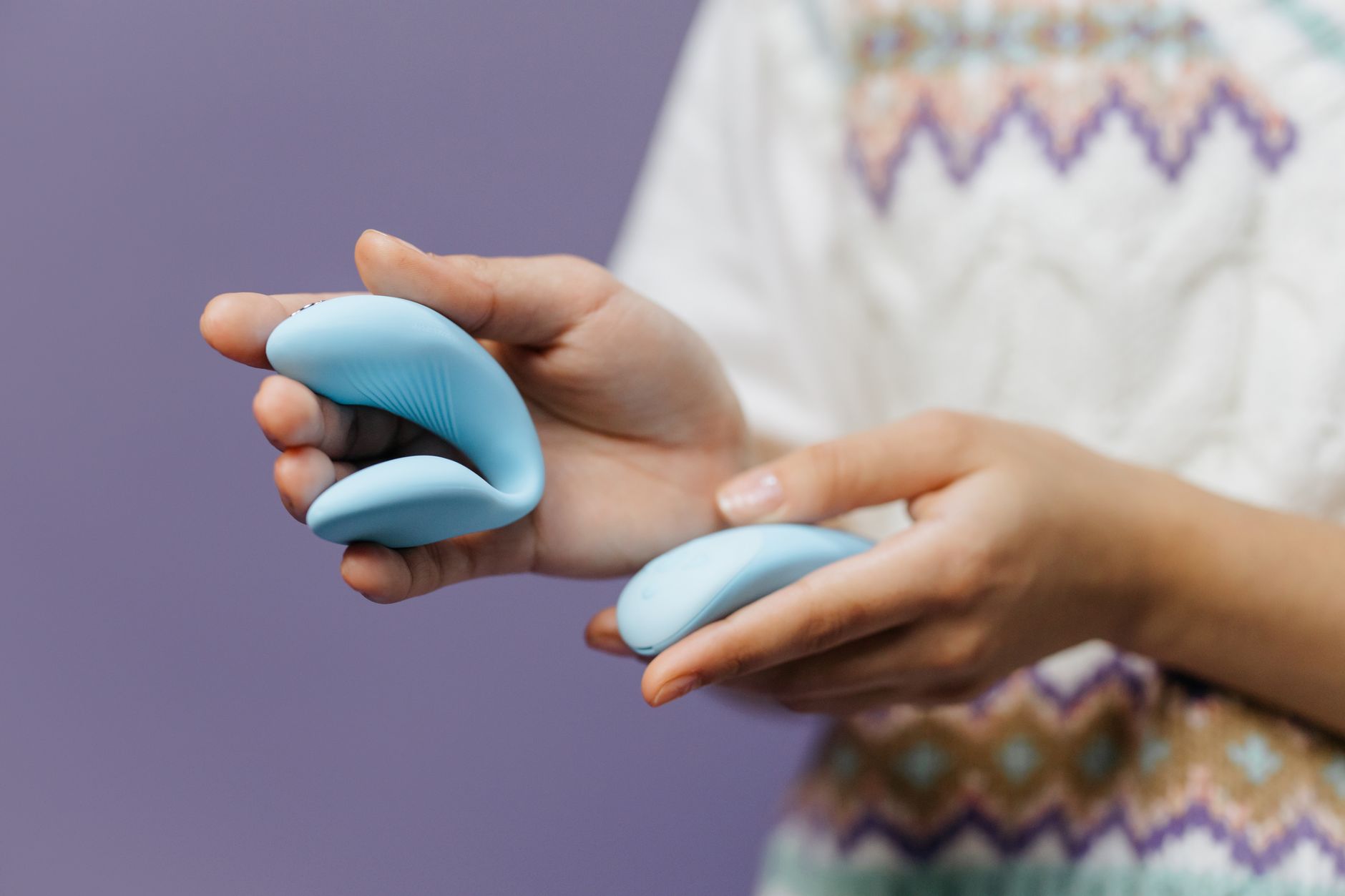
There's something about air-suction devices like the Lem that feels less threatening than traditional vibrators. Maybe it's the shape. Maybe it's that suction mimics the sensation of a mouth, which feels relational in a way buzzing doesn't. Maybe it's just that it's newer, so it doesn't carry the same loaded history in his head.
What matters: a lemon clitoral vibrator often lands softer with partners who've resisted toys before. You're not replacing sensation; you're amplifying something that already exists in partnered sex. The distinction is useful in conversation.
Start with information, not initiation
Don't bring it up mid-intimacy. That's negotiating in a moment when blood is in the penis or clitoris, not the prefrontal cortex. Instead, pick a neutral time. During a walk. Over coffee. When you're clothed and could end the conversation without awkwardness.
Keep it simple: "I've been reading about how lemon vibrators work, and I'm really curious to try one together. I want to see if it changes how I experience pleasure. Would you be open to that?" Notice what you're not saying: you're not saying "because you're not doing it right" or "I'm not getting what I need." You're saying curiosity. You're saying exploration.
Then listen. If he says no immediately, ask why. Most guys will stumble through one of those stories I mentioned earlier. Don't defend the vibrator. Instead, directly address the story: "I'm not looking for you to be replaced. I'm looking for us to expand what we do together." Or: "This isn't about you not being enough. This is about me knowing myself better and wanting to share that with you."
The warm-up phase before you bring it home
If he's hesitant but not completely closed off, give the idea time to marinate. Mention it again in a week or two, casually. Let him know you've used it solo and that it felt good. This does two things: it normalizes the object, and it proves it's not some couple's-only demand.
When people hear you've explored something alone and found value in it, the threat level drops. Suddenly it's not "she wants me to do this" but "she wants me to know about something she already loves." Different energy entirely.
The first time: context matters enormously
Don't introduce it during sex you're already having. Instead, suggest a session specifically framed as "trying something new together." This removes the pressure of fitting it into existing rhythm. You're not interrupting anything. You're doing something different.
Start with him watching you use it solo while you're intimate together, but not necessarily on him. You're in foreplay. He's touching you, kissing you, and at some point you pick up the lemon vibrator and use it on yourself. He watches. No expectation that he does anything except be present.
This is crucial: his job is to stay connected, not to feel inadequate. Keep eye contact. Keep talking softly. This is not a production. You're just adding a tool while remaining fully with him.
What to say while it's happening
Narrate what you're feeling, but not in a clinical way. "That feels so good" is fine. "The sensation is so different" is helpful. You're giving him language so his brain can understand this isn't a replacement; it's an addition. You're still present. You're still connected to him.
After, talk about it. Not a debrief, just: "Did you feel comfortable with that?" "What did you notice?" Give him room to say what was hard, what surprised him, what he might want to try differently next time.
When he's ready to touch the vibrator
That usually comes next. He might want to hold it for you. Or use it on you. This is where nervous guys sometimes get weird: they'll use it for like 20 seconds then stop, assuming they're doing it wrong.
Set expectations beforehand: "I like it when you use a steady pattern and let me guide you. It's not about how fast or hard, it's about staying consistent." This gives him a job that he can actually do well, instead of him free-styling and wondering if it's right.
The integration phase
Once he's comfortable with you using it solo during partnered sex, the next step is usually him using it on you while you're also being intimate in other ways. A lemon vibrator works beautifully during penetration, or during foreplay before anything else happens.
Where it gets really good: when he starts asking for it. When he realizes that watching you experience more intense pleasure actually makes sex better for both of you. Guys who initially resisted vibrators often become their biggest advocates once they see the effect on their partner's arousal and orgasm consistency.
This usually takes 3 to 5 times of using it together before it feels natural. Be patient with the awkwardness of early attempts.
When to bring in the conversation deeper
If he's still avoiding it after you've tried once or twice, it's worth having a longer conversation about what's underneath. Sometimes toy resistance is actually about larger intimacy issues: feeling disconnected, feeling like sex is one-directional, feeling like his pleasure is what matters more.
If that resonates, how to use a lemon vibrator when feeling disconnected from your partner goes deeper into rebuilding that connection first. Sometimes the toy comes after trust is rebuilt, not before.
The specific magic of lemon vibrators for this situation
Lem vibrators, in particular, tend to feel less intimidating because they look less like "traditional" vibrators and more like innovative wellness tools. The design is sleek. The function is about suction rather than vibration, which feels novel. Your partner might actually find it interesting rather than threatening once he understands what it does.
Start at the lower intensity settings. There's something psychologically different about a partner seeing a toy set to "gentle" versus "high." It feels less aggressive. More like exploration than performance.
The real win
The goal isn't to force your partner to accept vibrators. The goal is to expand what pleasure and intimacy look like in your relationship, together. A lemon vibrator is just one tool for that. The real work is the conversation: proving to your partner that wanting more pleasure for yourself isn't a statement about his inadequacy, it's a statement about your own worth.
That shift in framing changes everything. Once he understands that you're not asking for replacement, you're asking for amplification, most resistance softens. And when you return to intimacy after working through hesitation, you often find that partnered sex feels better than it ever did. More open. More honest. Less performed.
Frequently asked questions
How do I know if he's truly not interested or just anxious?
Anxious people usually say things like "I don't know" or "maybe someday" or "it feels weird." Truly disinterested people shut the conversation down entirely and change the subject. If he's asking questions, even skeptical ones, he's anxious, not disinterested. Anxiety can shift. Disinterest usually means you need to explore whether this is part of a larger mismatch.
What if I bring up the vibrator and he gets angry?
Anger around toys often signals deeper stuff: shame about his own body, fear of inadequacy, or control issues in the relationship. This isn't something a lemon vibrator solves. This is something a couples' therapist helps with. If his reaction is anger rather than discomfort, that's worth addressing with a professional before you try again.
Can I use the lemon vibrator without telling him first?
No. That usually backfires hard. He discovers it unexpectedly mid-intimacy, feels blindsided, and suddenly toys feel even more like a secret or a betrayal. Transparency first. Always. It takes longer but it actually works.
Is there a way to make it seem less "clinical" or "unromantic"?
Yes. Frame it as exploration, not as a problem-solving tool. Don't say "I need this." Say "I want to try this with you." Use it during sex when you're otherwise connected, not as a replacement for connection. Keep talking, keep touching, keep present. The vibrator amplifies what's there; it doesn't replace the intimacy.
What if he agrees but seems resentful during it?
Stop. Resentful agreement isn't real consent. After sex, talk about it: "I felt some hesitation. What's coming up for you?" Sometimes guys agree because they feel pressured. Sometimes they agree and then resent it afterward. That's important to know. Better to slow down and rebuild trust than to push through resentment.
Can lemon clitoral vibrators help if he's worried about lasting long enough?
Yes, actually. If his anxiety is about you taking too long to finish, a lemon vibrator often means you orgasm faster, which paradoxically reduces his performance anxiety. This can be a useful framing in conversation: "This might actually help both of us relax more during sex."
The real bottom line
Partners who resist toys often become partners who love them once the barrier of threat is removed. The shift happens through conversation, through transparency, and through him experiencing firsthand that your pleasure and your connection to him aren't opposed forces. They're the same thing.
If you're stuck on this, reaching out to talk through the specific dynamics in your relationship can help clarify what's underneath the resistance and what approach might work best for your situation.