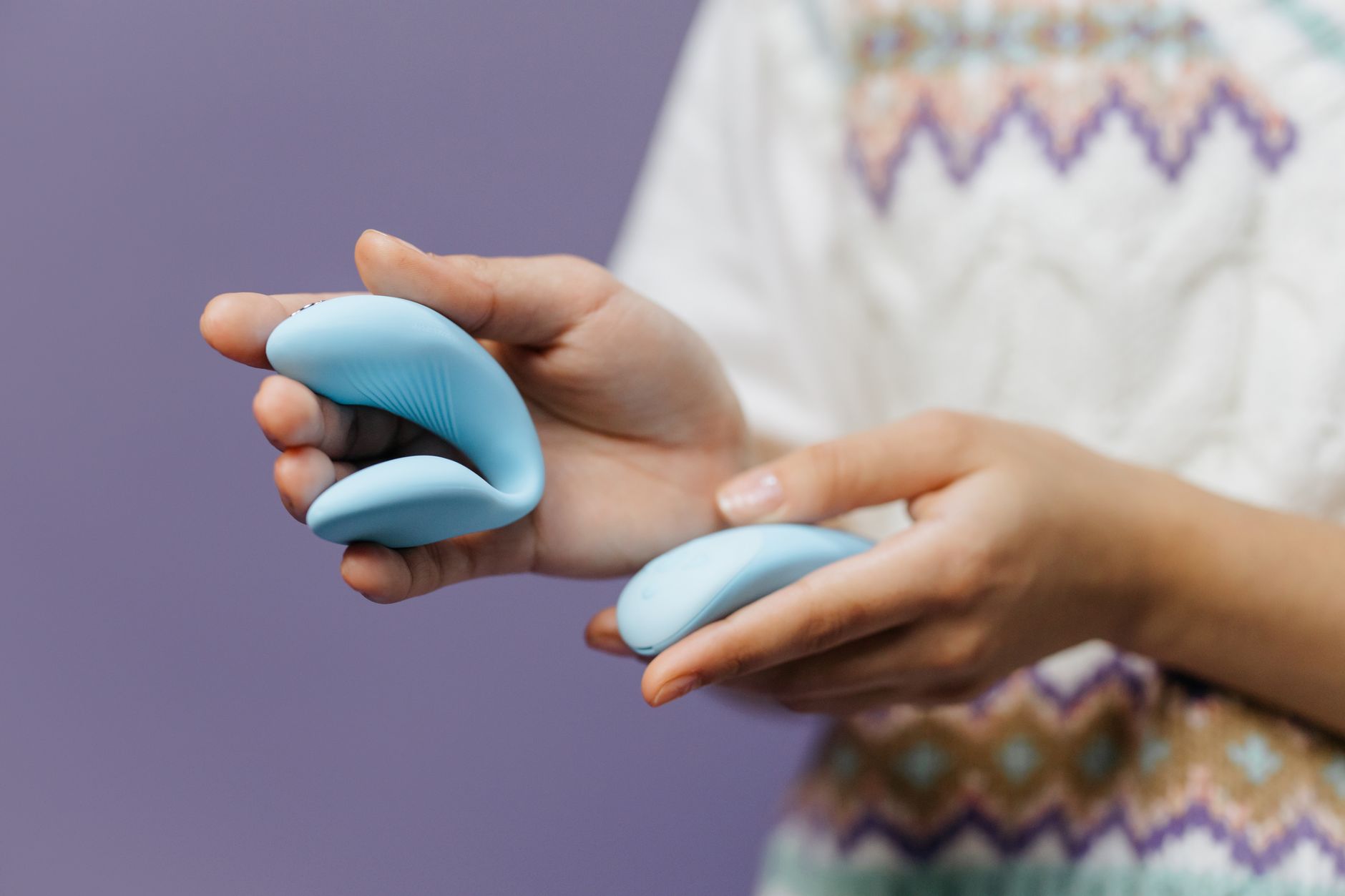
When the distance feels more than physical
Disconnection in a long-term relationship doesn't always announce itself loudly. It creeps in quietly. One day you notice your partner stops reaching for your hand. Conversations stay surface level. Sex becomes something you schedule rather than something you want. The emotional intimacy that held you together has frayed, and the physical pleasure has gone cold with it.
Here's what I want to be clear about: you're not broken. Your relationship isn't over. And pleasure doesn't have to wait until the emotional work is done.
Using a lemon vibrator when you're feeling disconnected from your partner serves a specific purpose that has nothing to do with replacing them. It's about reclaiming your own capacity for sensation, rebuilding trust in your body, and creating a bridge back toward each other. Let me show you how.
Understanding the disconnect
When couples drift apart emotionally, the first thing that dies is often curiosity. You stop asking. Your partner stops sharing. Touch becomes functional or absent. The nervous system reads this as a threat, which means arousal shuts down as a protective mechanism. Your body is right to do that. It's saying, "Something feels unsafe here."
Pleasure in the context of disconnection feels risky. You might fear vulnerability. You might worry that wanting pleasure means you're pretending everything is fine when it isn't. Or you might feel resentment so quietly it doesn't even have words, and your body responds by simply not responding.
All of this is normal. And none of it means you can't use a lemon clitoral vibrator to start shifting the nervous system back toward openness. Solo pleasure is actually where this often needs to start.
Why solo exploration matters when you feel distant
When I work with couples navigating disconnection, I often recommend that both partners spend time reconnecting with their own pleasure first. This might sound counterintuitive. Shouldn't we reconnect together? Sometimes, yes. But sometimes, you need to remind your body that pleasure is still possible before you can share it with someone else.
Using a lemon vibrator alone gives you three critical things. First, it gives you control. You're not waiting for your partner to initiate. You're not performing. You're not managing their feelings about your pleasure. This agency alone can shift how your nervous system experiences your body.
Second, it gives you information. As you explore with the vibrator, notice what actually feels good. Does sensation feel distant? Does pleasure come easily, or do you need to work for it? Are you numb, or are you hypervigilant and unable to settle into touch? These observations aren't failures. They're data. They're the beginning of understanding what you actually need right now.
Third, it reminds you that your pleasure is separate from your relationship. This matters. When you're feeling distant from a partner, it's easy to believe that your desire died along with the connection. Using a lemon sucker or clitoral vibrator solo proves to yourself that desire wasn't actually gone. It was waiting.
Starting the conversation with your partner
If you want to eventually integrate this into partnered pleasure, you'll need to talk about it first. This conversation matters more than the vibrator itself.
Start with honesty about where you are. "I've been noticing that things feel distant between us, and I miss you. I also miss feeling pleasure. I want to explore some ways to reconnect with my own body, and I'm wondering if that's something you'd want to understand better." Notice the permission built into this. You're not asking for his approval to have pleasure. You're inviting him into understanding what you're doing and why.
If your partner responds with curiosity, great. Share what you're exploring. Tell him what the lemon vibrator feels like. Invite him to observe, to participate, or simply to know what you're doing when you take time alone. This kind of transparency builds trust faster than anything else.
If he responds with defensiveness or dismissal, that's information too. It might signal that there's deeper work to do before pleasure becomes possible together. In that case, your solo exploration becomes even more important. You're reconnecting with yourself while the partnership repairs. Eventually, those two things can converge. Right now, they might need to stay separate.
Photo by Anna Shvets on Pexels
How to use a lemon clitoral vibrator when emotion is tangled
When disconnection is present, pleasure requires a gentler setup. You're not trying to chase an orgasm. You're trying to wake up sensation.
Start by creating actual privacy. Not just physical privacy, but mental privacy. Tell your partner you're taking this time. Set a timer if it helps. The structure gives your nervous system permission to settle. You're not stealing time. You're taking time that belongs to you.
Begin with the lemon vibrator on the lowest setting. You might use pattern one or two on the Lem. The goal isn't intensity. It's consistency. Let the vibration simply exist against your skin for a few minutes before expecting anything to happen. Your nervous system needs time to remember that touch can be safe.
Notice what comes up. Does your mind wander? That's fine. Does irritation arise? That's also fine. Does pleasure surprise you? Perfect. There's no wrong experience here. You're building a new relationship with your own body in the context of emotional distance. That's brave work.
As sensation begins to return, you might stay with gentle patterns. You might explore different placements. You might find that bringing in a fantasy or scenario helps bridge the gap between disconnection and arousal. This is all valid. This is all part of remembering that pleasure exists independently of your current emotional state.
When you want to bring the vibrator into partnered time
Once you've reconnected a little with your own pleasure, integrating a lemon vibrator into partnered exploration can be a powerful bridge. It removes some of the pressure from your partner to perform a role he might not be occupying right now.
You might start with observation. He watches you use the lemon clitoral vibrator. This isn't about him doing anything. It's about him seeing you reconnect with pleasure while he's present. Many couples find this genuinely intimate. It's vulnerable without requiring emotional performance.
From there, he might use the vibrator on you. He might hold it while you guide the placement. He might use it as foreplay. The specific mechanics matter less than the conversation underneath: "I want us to find our way back to pleasure together. This is one way we might do that."
Some couples find that introducing a toy shifts something essential. The pressure to perform dissolves. The focus becomes collaborative exploration rather than him trying to "fix" your pleasure. That reframe can be where the emotional reconnection actually begins.
Navigating shame and other feelings
If using a lemon vibrator brings up shame, pause and notice it. Shame often lives underneath disconnection. We feel distant from partners partly because we've internalized some story about what we're allowed to want. "Good partners don't think about their own pleasure." "If I'm satisfied, it means something is wrong with us." "Wanting pleasure means I'm not grateful for what I have."
These are lies your nervous system is telling you. They're understandable lies. They're often inherited from culture or family. But they're lies nonetheless.
Your pleasure is not a threat to your relationship. Your desire is not a luxury you have to earn by being a better partner first. Your body's capacity for sensation is not something you forfeit when things feel distant. Using a lemon sexual toy is one way of refusing those stories. It's a small act of reclamation.
When to call in professional support
If disconnection runs deep and you've tried solo exploration and conversation without movement, couples therapy becomes valuable. A therapist can help you understand what caused the distance. They can help you rebuild emotional intimacy in ways that pleasure alone cannot.
But this doesn't have to happen before you start using a lemon vibrator. You can work on your own pleasure and seek professional support simultaneously. They're not competing priorities.
The way forward
Disconnection is real. It's painful. It's also survivable, and it's often recoverable. Using a lemon clitoral vibrator during this time isn't about pretending everything is fine. It's about refusing to abandon yourself while the partnership repairs. It's about staying in your body, maintaining your capacity for sensation, and building a foundation from which genuine reconnection can eventually happen.
Your pleasure matters. Your partner's returning to it matters. The bridge between your two bodies matters. Start here. Start with yourself. The rest will follow.
People Also Ask
Is it disloyal to use a lemon vibrator when my relationship feels disconnected?
Not even slightly. Your pleasure belongs to you. Using a clitoral vibrator is actually an act of self-loyalty. You're maintaining your own well-being while navigating a difficult period. Partners in healthy relationships often appreciate knowing that their partner is taking care of their own needs rather than abandoning themselves. This is different from using pleasure to avoid the emotional work. If you're also talking to your partner and seeking to reconnect, solo exploration is deeply compatible with relationship repair.
Can using a lemon sexual toy with my partner make us closer?
It can be one element of reconnection, but it's not a substitute for emotional work. The vibrator removes some performance pressure and can create a space where you both feel less self-conscious. But the real intimacy comes from vulnerability, conversation, and genuine curiosity about each other. Use the lemon vibrator as a tool within that larger context, not as a shortcut around the harder conversation.
How do I know if my disconnection is normal or a sign my relationship is ending?
Disconnection without any willingness to address it from either partner is concerning. Disconnection that both of you acknowledge and are working to repair is a normal part of long-term relationships. The difference is often just honesty and effort. If you and your partner can talk about the distance and both feel motivated to close it, the relationship usually survives and deepens. If one or both of you has checked out entirely, that's different information. A relationship coach or therapist can help you assess which situation you're in.
My partner feels threatened when I use a lemon clitoral vibrator. How do I help them feel secure?
This usually signals that your partner's own insecurity is in play. Reassurance helps, but it has limits. You can't convince someone that your pleasure isn't a threat by explaining harder. What works is consistency. Use the vibrator. Keep talking. Remain committed to the relationship. Over time, his nervous system will learn that your pleasure doesn't mean you want to leave. If he continues to feel threatened despite genuine reassurance, that's worth exploring in couples therapy. His anxiety might be about something deeper than the vibrator itself.
If we reconnect emotionally, will we still need a lemon vibrator?
Need is a big word. You might find that as emotional intimacy returns, partnered pleasure feels more accessible without tools. Or you might find that lemon vibrators and clitoral vibrators have become part of your regular rhythm, and you keep using them because they feel good. Both are fine. Tools don't disappear. They integrate.
What if I use the vibrator and nothing happens? What if pleasure still feels far away?
Then you're probably dealing with something deeper than disconnection. Numbness can signal depression, relationship trauma, or just a nervous system that needs more time to feel safe. If pleasure doesn't return after several solo explorations with the lemon sucker or other clitoral vibrators, talking to a therapist or doctor becomes important. Sometimes the path back to pleasure isn't through trying harder. It's through understanding what your body is protecting you from.
References
Gottman, J. M., & Silver, N. (2015). The seven principles for making marriage work: A practical guide from the country's foremost relationship expert. Harmony.
Perel, E. (2018). Mating in captivity: Unlocking erotic intelligence. Harper.
van der Kolk, B. (2014). The body keeps the score: Brain, mind, and body in the healing of trauma. Viking.
Tanner, B. A., et al. (2022). Patterns of disconnection and reconnection in long-term relationships. Journal of Couple & Relationship Therapy, 21(3), 224-241.