Let's talk about the thing nobody wants to admit
Libido mismatch is one of the most common relationship complaints I hear in my office, and it's also one of the loneliest ones to carry. You don't see it on listicles. Your friends don't bring it up at dinner. But statistically, one partner in roughly half of long-term couples wants sex more often than the other.
Here's what makes it particularly painful: the person with lower desire often feels broken or pressured. The person with higher desire often feels rejected or resentful. And both feel like there's something fundamentally wrong with the relationship.
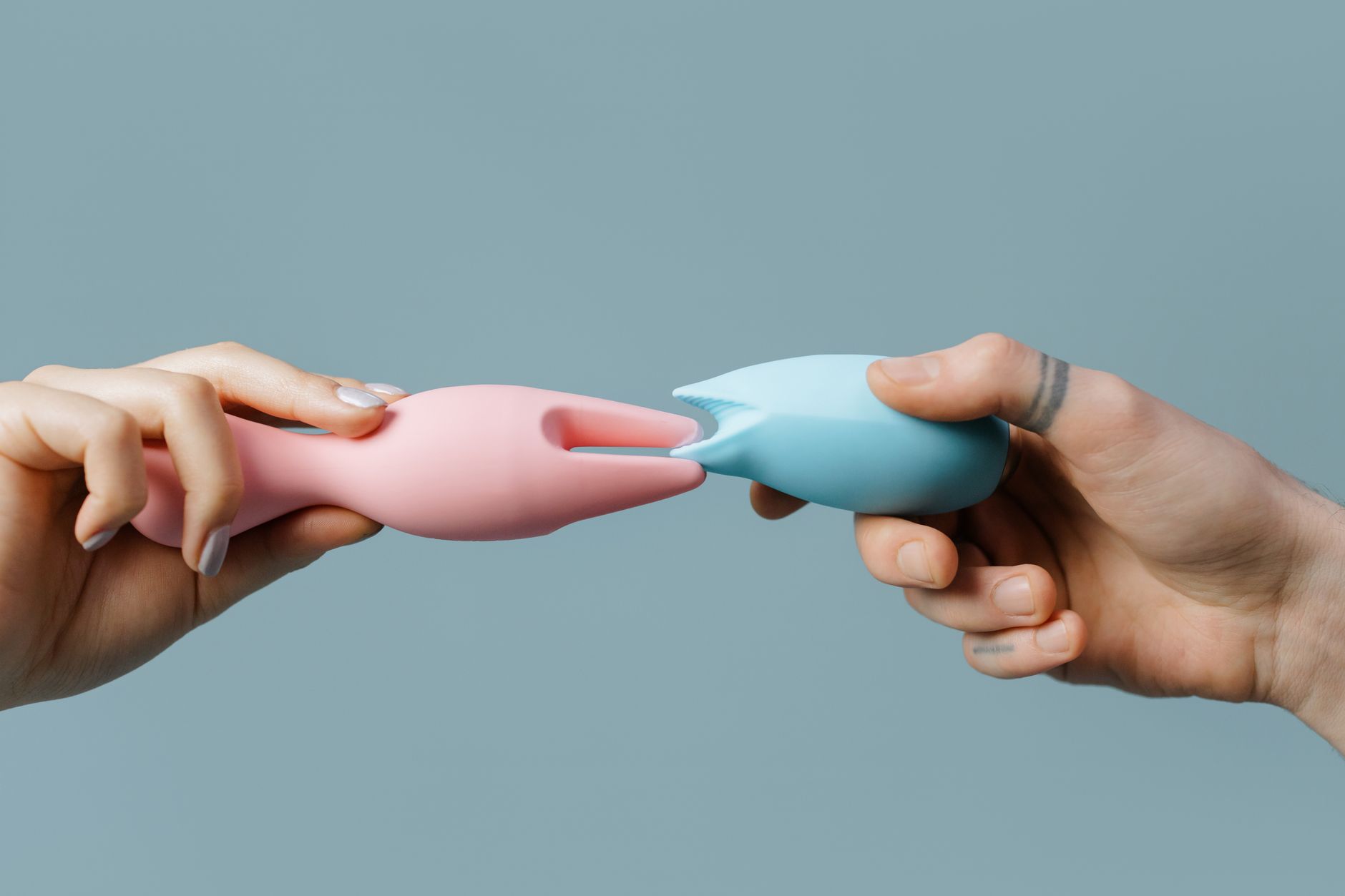
There usually isn't. What's happening is a mismatch in arousal patterns, baseline desire, stress load, or sometimes just circadian rhythm. A lemon clitoral vibrator doesn't solve incompatibility. But it can solve something far more specific: the pressure dynamic that makes the gap feel insurmountable.
Why desire gaps widen when toys don't enter the picture
Here's the trap I see couples fall into: the higher-desire partner initiates. The lower-desire partner feels obligated or stressed. That stress kills arousal. Over time, lower-desire partners start avoiding situations where sex might happen. That feels like rejection to the higher-desire partner, who then initiates more desperately. The gap widens. It becomes a cycle.
What gets lost is spontaneous desire. It dies not because the couple is incompatible, but because the pressure cooker has built such intense walls around sexuality that actual arousal can't breathe.
A lemon vibrator reframes the entire conversation. Suddenly it's not about whether Partner A wants sex or Partner B doesn't. It's about a third thing: pleasure, on neutral ground, that doesn't require matching libidos.
The practical shift: from initiation to invitation
Initiation is high-stakes. It carries the weight of "I want you" and "Do you want me?" and all the rejection baggage that comes with it. An invitation is softer. It's "I found something that feels good and I want to share it with you."
Let me show you what I mean.
Instead of "Can we have sex tonight?", the higher-desire partner might say: "I want to spend some time with you tomorrow evening. I've been curious about trying something different together. No pressure, but I'd love your company."
That's an invitation, not a proposition. It removes the obligation. It also removes the immediate sexual framing that can trigger the lower-desire partner's defenses.
When you introduce a lemon vibrator into this space, you're introducing a new variable. It's not "Will you have sex with me?" anymore. It's "Will you explore this with me?"
How to actually introduce it without it feeling like rejection or pressure
Timing matters. Don't bring it up during a conflict or a moment of sexual rejection. Don't present it as a solution to "your" problem (the low-desire partner's problem). Present it as curiosity, not correction.
"I read about these clitoral vibrators and got curious. A lemon vibrator works differently than other toys because of how it uses suction. I'd love to try it together sometime. Would you be interested in exploring that with me?"
Notice: no blame. No implication that something is wrong. Just genuine curiosity.
The lower-desire partner might still say no. That's okay. But often they'll say yes to exploration in a way they won't say yes to sex itself, because the stakes feel different.
What changes when both partners are in the room
Here's something I observe in my practice that surprises people: when the higher-desire partner has their own source of consistent pleasure, the pressure on the lower-desire partner evaporates.
This isn't magic. It's psychological relief. The lower-desire partner no longer carries sole responsibility for the higher-desire partner's sexual satisfaction. That's a massive burden to lift.
At the same time, when the lower-desire partner watches their partner experience real pleasure with a lemon vibrator, something often shifts. They see their partner's body respond. They see genuine enjoyment that isn't about them, which paradoxically makes them less defensive. Some people find their own desire awakens just by being present for their partner's arousal.
That's not something you can force. But it's something you can create space for.
The rhythm that works when desire is unequal
This is practical, not romantic, but it matters: mismatched couples often function best when there's a scheduled container for exploration.
I know that sounds clinical. But here's why it works: spontaneity doesn't work when one person's baseline arousal is high and the other's is low. Spontaneity requires the lower-desire partner to be ready when the higher-desire partner initiates. That's a recipe for constant mismatch.
What works instead: you choose a specific evening (Friday night, Sunday afternoon, whatever fits your life). That becomes your shared pleasure time. Not an obligation. Not a performance. But a scheduled space where both of you know that exploration happens.
Within that container, the lower-desire partner can mentally prepare. Stress can be cleared. The pressure is contained to a specific time, which paradoxically makes it feel less heavy.
Inside that container, a lemon vibrator becomes a shared focus. You're not negotiating desire. You're exploring sensation together.
When one partner is resistant to toys
Some people come to therapy saying their partner refuses to use or engage with sex toys. Usually, underneath that resistance is a belief. Sometimes it's "Real desire doesn't need tools." Sometimes it's "If we need a vibrator, I'm not enough." Sometimes it's just plain unfamiliarity.
The reframe that helps: a clitoral vibrator isn't a replacement for a partner. It's a tool that does something a human hand can't do for sustained periods. It's not about adequacy. It's about access.
When partners have different pleasure preferences, a tool like a lemon vibrator gives both people agency. The higher-desire partner gets consistent pleasure. The lower-desire partner gets relief from pressure.
If your partner is resistant, don't push. Instead, offer information: a lemon clitoral vibrator uses suction technology that stimulates different nerve pathways than friction alone. It's not about replacing your partner. It's about expanding what's possible.
What happens to desire when pressure disappears
This is the counterintuitive part that therapy research supports: desire often increases when pressure decreases.
When the higher-desire partner isn't desperately pursuing sex, and the lower-desire partner isn't defensively avoiding it, both people relax. That relaxation creates actual nervous system space for arousal to exist.
I've watched couples report that after they introduced a tool like a lemon vibrator and established a less pressured rhythm, the lower-desire partner's libido actually increased. Not because the toy is magical. But because they could experience pleasure on their own terms, which meant their nervous system stopped associating sex with stress.
When you need more clitoral contact time and your partner has a different timeline, a vibrator bridges that gap. It stops being about matching speeds. It's about both people having what they need.
The conversation that has to happen
Libido mismatch doesn't live in the bedroom. It lives in how you talk about desire, pleasure, and worth.
If you're the higher-desire partner: your partner's lower desire is not rejection of you. It's their baseline. Separating those two things is essential.
If you're the lower-desire partner: your body's rhythm is valid. You don't need to want sex more often to be a good partner. And you're allowed to explore pleasure in ways that feel authentic to you.
The lemon vibrator is useful because it gives both of you something to focus on that isn't the mismatch itself. It's a shared project, not a symptom of a problem.
When to bring in additional support
If the mismatch comes with resentment so heavy that even neutral conversations feel impossible, therapy helps. Not because there's something wrong with your desire. But because the meaning you've both attached to it needs untangling.
When you're reconnecting after extended time apart, tools like a clitoral vibrator can help rebuild intimacy. But if the fundamental communication is fractured, the tool alone won't repair it.
A good couples therapist can help you separate desire mismatch from relationship incompatibility, which are not the same thing.
FAQ
Can a lemon vibrator actually fix libido mismatch?
No. A tool can't fix a mismatch because a mismatch isn't broken. It's just different. What a vibrator does is remove the pressure that makes difference feel like incompatibility. It creates space for both people to experience pleasure without negotiating whose desire "wins."
What if my partner thinks using a vibrator means I'm not satisfied with them?
This belief comes up a lot, and it's worth addressing directly. Tell your partner: "A vibrator does something different than you do. It's not better or worse. It's different. I want to use it with you, not instead of you." The research is clear that couples who use tools together report higher satisfaction, not lower.
Is it normal to want sex way more or way less than my partner?
Completely normal. Libido varies by stress, hormones, age, relationship stage, and individual neurology. The wide range of normal desire is why desire mismatch is so common. It's not a sign that anything is wrong.
How do we talk about libido mismatch without it turning into an argument?
Talk about it outside the bedroom, when nobody is activated. Use "I" statements: "I've noticed we have different rhythms, and I want to understand yours better." Avoid blame: "You never want sex" or "You're always pushing for sex." Both activate defensiveness. Frame it as a puzzle you're solving together, not a problem one of you created.
Does scheduling sex kill spontaneity?
For couples with mismatched desire, scheduled sex actually increases spontaneous desire because it removes the constant negotiation. You might be surprised how much spontaneous sex happens when you're not locked in pressure cycles.
What if the mismatch is extreme, like one partner wants sex daily and the other wants it once a month?
That's genuinely difficult, and it requires honest conversation about whether you're compatible in this way. A vibrator can help bridge normal variation (weekly vs. biweekly). But if the gap is that wide, it might signal a deeper incompatibility that needs professional support to navigate.
The bottom line
Libido mismatch doesn't mean you're incompatible. It means you have different baseline desires, and the pressure of trying to force them to match has probably made everything worse. A lemon vibrator reframes the whole dynamic by giving both of you an alternative: shared pleasure that doesn't require matching arousal timelines.
The real work isn't using the vibrator. It's the conversations you have around it. It's separating your worth from your desire. It's giving your partner permission to want differently than you do.
That shift changes everything.
If you and your partner are stuck in a pressure cycle around sex, talking to someone trained in couples dynamics can help. Reach out to us if you want guidance on navigating this together.