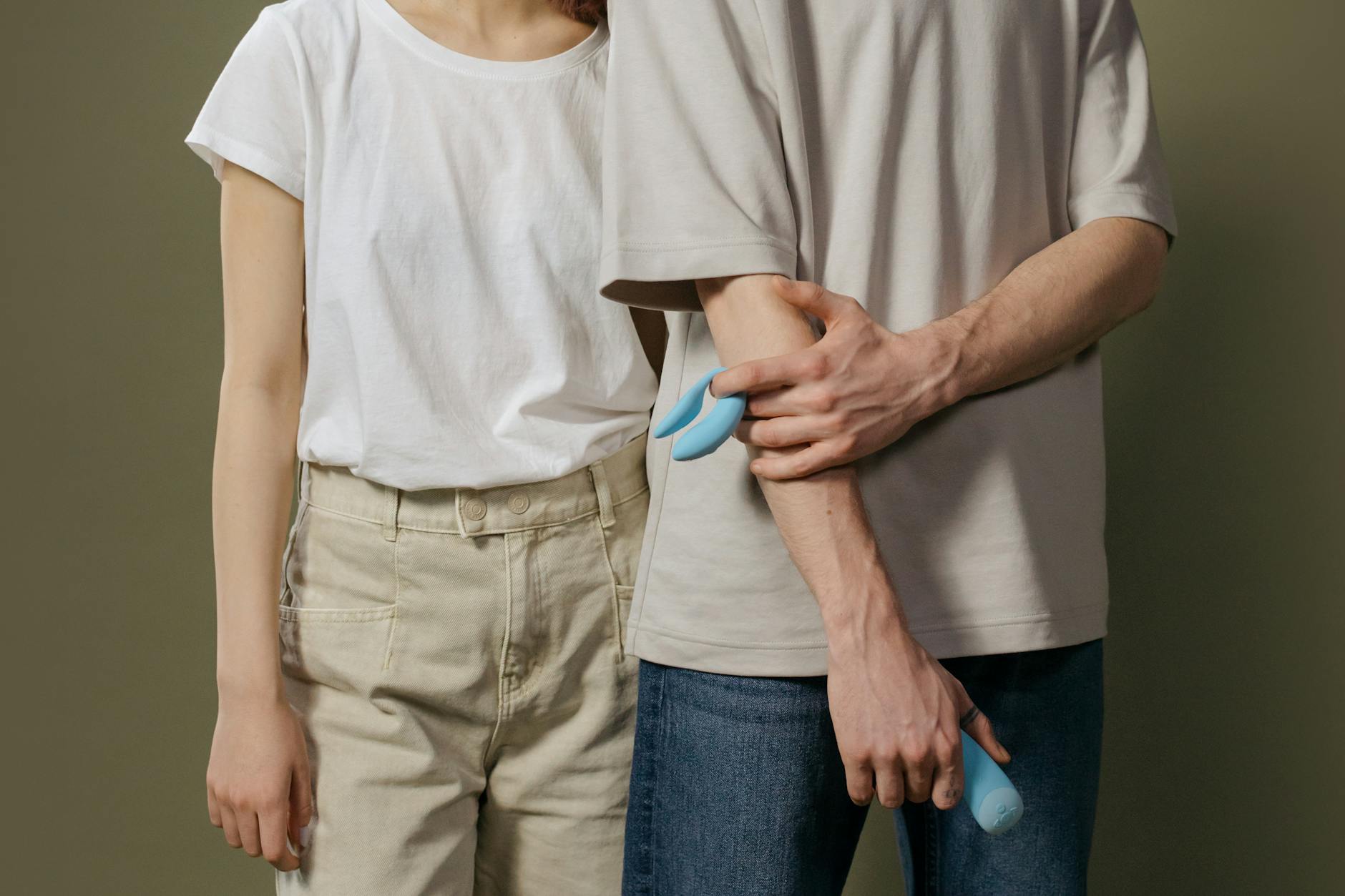
The thing nobody tells you about touching the same person for ten years
Your hand knows their body so well it stops paying attention. That's not failure. That's actually how the nervous system works after years of repetition. The stimulation becomes background noise.
This is what I see most often in my therapy practice with long-term couples. Not resentment, not infidelity, not incompatibility. Just the slow fade of sensation that happens when touch becomes routine.
Here's the part that changes everything: a lemon clitoral vibrator like the Lem isn't a replacement for your hand or your partner. It's a reset button for both of you.
Why sensation fades in long-term partnerships
Neurologically, your brain stops registering stimulation it's experienced thousands of times. This is called habituation, and it's not personal. It's protective. Your nervous system filters out redundant input so you can pay attention to novel threats or opportunities.
Over years together, your partner's touch becomes predictable. Even if the sex is good, it's the same rhythm, the same pressure, the same location. The novelty is gone.
Add to that the psychological layer. Long-term couples often stop communicating about pleasure entirely. You fall into patterns because talking about desire feels awkward after ten years. You assume you know what works. You stop asking.
Both of these forces pull pleasure into the background.
What changes when you introduce a lemon vibrator
An air-suction vibrator like the Lem introduces three things simultaneously:
1. A completely different sensation. Air suction doesn't replicate anything your partner's hand can do. It's not faster friction or deeper pressure. It's a pulsing wave across the clitoral tissue that your nervous system reads as entirely novel. Novelty wakes up sensation.
2. A reason to renegotiate touch together. Introducing a lemon vibrator into partnered play forces a conversation. When do you use it? How? Who's holding it? What feels good? Suddenly you're communicating about pleasure again in a way that feels less vulnerable than starting from scratch with words alone.
3. A shared focus. Instead of one person performing and one person receiving, you're both engaged in exploration. That shifts the dynamic from obligation to curiosity.
I see couples reconnect physically in weeks when they introduce the right tool. Not because the tool is magic. Because the tool gives them permission to pay attention again.
How to bring a lemon clitoral vibrator into an established partnership
Timing matters. You don't introduce this during conflict or distance. You bring it up when the relationship feels okay but the sex has gone quiet.
Start with context, not surprise. "I've been thinking about us trying something new together. Would you be open to that?" If they say yes, show them the tool. Let them hold it. Explain how it works, what sensation it creates.
The first time you use it together, lower expectations. You're not looking for earth-shattering orgasm. You're looking for information. How does this feel? What patterns work? Where's the sensitivity?
Many couples find that using a lemon vibrator together early in a session, before partnered sex, resets their connection. It's foreplay in the truest sense. It gets you both paying attention, communicating, noticing each other again.
Other couples find that the receiving partner uses the vibrator while the giving partner uses their hands elsewhere. This hybrid approach keeps both people engaged without making anyone feel replaced.
When long-term couples resist this idea
I hear it often: "If we need a toy, doesn't that mean something's wrong?"
No. It means you've been together long enough that your nervous systems need novelty to stay engaged. That's not a flaw. That's biology.
The resistance usually comes from fear that introducing a lemon vibrator signals inadequacy. Your partner's touch isn't "enough." But that's not how sensation works. A vibrator doesn't replace hand touch. It adds a frequency your hand literally cannot produce.
Think of it like cooking together. Your partner makes pasta perfectly. But you still want to try Thai food sometimes. The Thai restaurant doesn't make the pasta worse. It just gives you something different.
The emotional shift that happens first
Before the sensation changes, the emotional atmosphere changes. When you show your partner you're willing to explore together, when you're curious instead of resigned, when you're talking about desire openly for the first time in years. That alone rebuilds intimacy.
I had a couple in my practice, married 18 years, who hadn't discussed sex in over a decade. When they brought a lemon vibrator into the conversation, it opened something. They started talking about what they actually wanted. Turns out they both felt disconnected. Neither had initiated in months because they assumed the other person wasn't interested.
The vibrator didn't fix their relationship. The conversation about the vibrator fixed it.
What makes air-suction lemon vibrators particularly effective
Traditional vibrators work through vibration frequency. Air-suction technology like the Lem uses a completely different mechanism. A gentle seal around the clitoral tissue creates waves of suction that stimulate the whole clitoral structure, not just the surface.
For long-term couples specifically, this matters because the sensation is so different from partner touch that it genuinely registers as novel to your nervous system. It wakes things up.
Also practically: you can use a lemon clitoral vibrator together without it getting in the way of partnered intimacy. It's small enough for one person to hold while both of you remain connected. That's not possible with a larger vibrator, which is why couples often abandon toys after the first few tries.
Common questions about using lemon vibrators together
Does it mean my partner's touch isn't working anymore? No. It means your nervous system has adapted to that touch. Introducing novelty isn't a criticism. It's chemistry.
Who should hold it? Either. Some couples prefer the receiving partner to hold it and control the sensation. Others prefer the giving partner to hold it as part of their touch offering. Both work. Alternate and see what feels right.
Should we use it every time? Absolutely not. Use it when you want that specific sensation. Your partner's hands and body are still your primary tool. This is addition, not replacement.
What if one partner wants to use it and the other doesn't? Start there. Listen to the hesitation. Often it's not about the vibrator itself but about vulnerability or fear of change. Address the feeling underneath.
How long before we see a difference? Many couples report that the conversation alone shifts things within days. The actual physical reconnection takes a few sessions to feel natural.
Making space for ongoing pleasure in long-term relationships
Honestly, the lemon vibrator is just one tool. The real shift happens when you decide that your pleasure together still matters. That it's worth paying attention to, worth experimenting with, worth having awkward conversations about.
Long-term relationships don't need to be passionless. They need intention. They need curiosity. They need the willingness to admit that what worked five years ago might need updating.
A high-quality air-suction clitoral vibrator like the Lem gives you a concrete place to start that conversation. And once the conversation opens, the pleasure usually follows.
FAQ: Lemon vibrators for long-term couples
How do I bring up using a lemon vibrator with my partner without sounding like I'm complaining about our sex life?
Frame it as addition, not correction. "I've been thinking about ways we could explore together" is different from "Our sex life isn't working." You're inviting adventure, not criticism. Make it about curiosity shared, not problems to fix.
Can using a lemon clitoral vibrator together actually rebuild intimacy after years of distance?
Yes, but only if you're also willing to talk. The vibrator is the excuse. The conversation is the real work. When you introduce a shared tool, it opens the door to discuss pleasure, boundaries, and desire in ways that feel less loaded than starting from scratch.
What if my partner feels threatened by the idea of a lemon vibrator?
Go slower. Show them the research. Explain the difference between novelty and replacement. Sometimes couples benefit from reading about this together or watching educational content. Often the threat feeling softens when they see how many long-term couples use vibrators as a reconnection tool.
Is there a best time in your cycle to introduce a lemon vibrator into partnered play?
Generally, the follicular phase (right after your period through ovulation) is when sensitivity is highest and arousal tends to build faster. But honestly, the best time is whenever you both feel curious and open. Sensation matters more than timing.
Do we need to change our entire sexual routine to incorporate a lemon vibrator?
No. You can introduce it in one session and keep everything else exactly the same. Or you can start using it as part of foreplay. Or only during partnered sex. You control how integrated it becomes. Start simple and let it develop naturally.
How often should a couple use a lemon vibrator together?
There's no rule. Some couples use it several times a week. Others use it occasionally as a reconnection tool. What matters is that you're both comfortable and interested. If one person is using it because they feel obligated, that defeats the purpose.