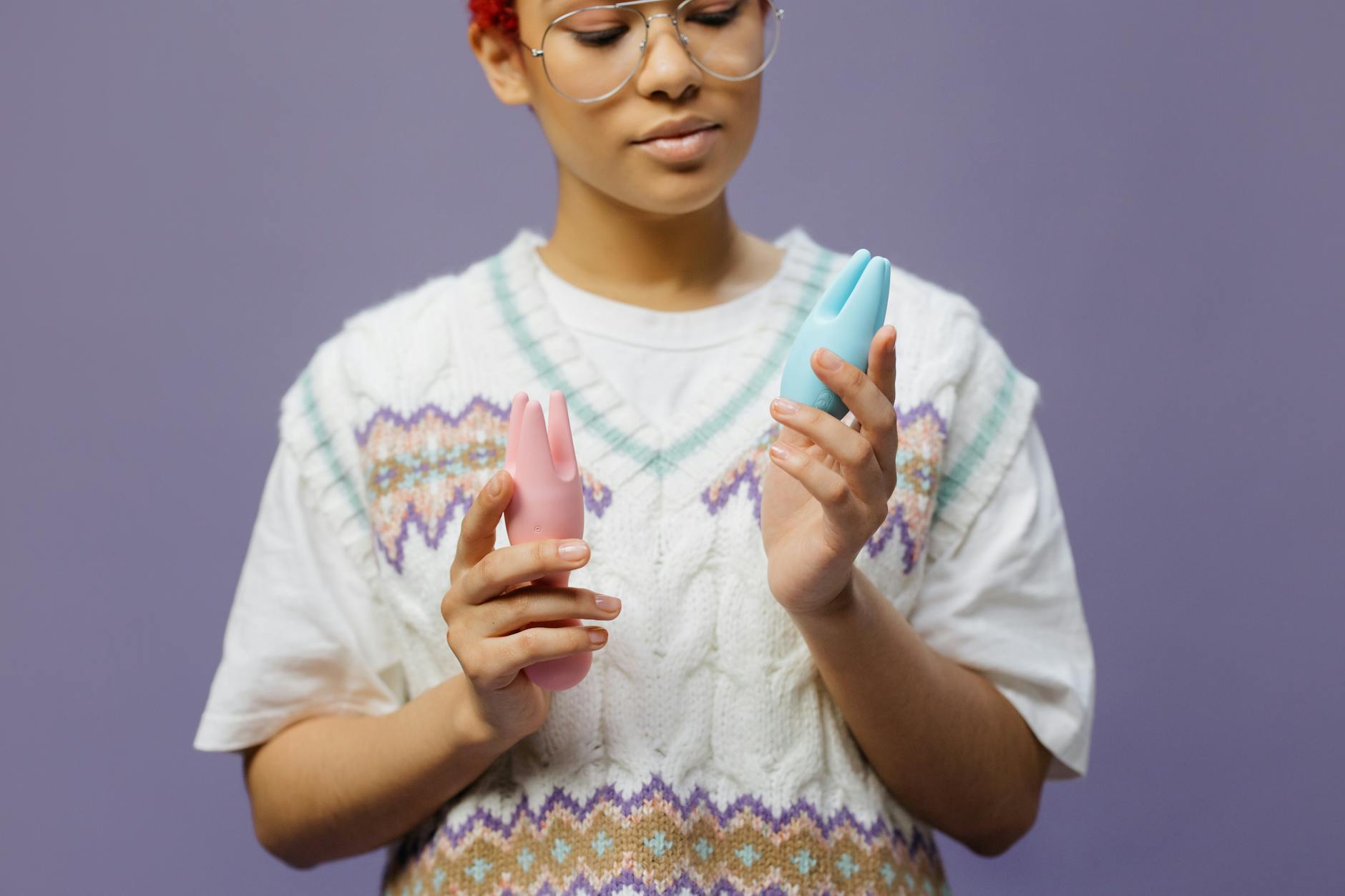
If that first buzz felt like too much, you're not alone
Most people who use a clitoral vibrator for the first time report one of two things: either it's weirdly muted, or it feels almost unbearably intense. There's rarely a middle ground. That intensity isn't a sign you're doing it wrong or that your body is broken. It's actually a sign that the device is working exactly as designed.
Here's what's happening on a neurological and physical level, plus how to actually enjoy those first sessions instead of white-knuckling through them.
Why clitoral vibration feels so different from anything else
Your clitoris has roughly 8,000 nerve endings concentrated in a space smaller than a pea. For context, your fingertips have about 2,500 in a much larger area. That density matters because it means vibration gets picked up immediately and intensely.
When you use your fingers or a partner's touch, stimulation is variable. Your brain can track the rhythm, predict it, and build arousal gradually. Vibration is different. It's constant, rapid, and doesn't follow the pattern your nervous system evolved to expect. The sensation bypasses the usual warming-up process and goes straight to activation.
Add to that the fact that lemon vibrators, designed with air-suction technology, stimulate differently than traditional vibration. Instead of direct pressure, the suction creates a rhythmic pulse that feels more like a mouth around the clitoris. For some bodies, that's instantly pleasurable. For others, it's startling.
The numbness paradox
Here's something weird but common: you might feel overwhelmed by intensity, but then after about 30 seconds, the sensation dulls. This isn't desensitization in the long-term sense. It's your nervous system adapting. Your brain gets flooded with signal and actually dampens its own response to prevent overload.
That's why many first-time users describe the experience as "at first it was too much, then suddenly I couldn't feel it anymore." You didn't break your clitoris. Your body just hit the pause button on input.
Speed settings exist for a reason
If you have a lemon vibrator or any clitoral vibrator with multiple patterns, start on the lowest setting. Not the second-lowest. The absolute lowest. This matters because your body isn't used to this type of stimulation, and there's no value in pushing intensity.
Spend 3-5 minutes on the lowest setting. Just feel what's happening. You're not trying to orgasm right now. You're learning what the device does and how your body responds to it.
After those first few minutes, you can experiment with increasing intensity if you want. Or you can stay on pattern one for the whole session. Both are completely fine.
The warm-up that changes everything
Most first-time vibrator users skip warm-up entirely, which is the exact opposite of helpful. Before you introduce any toy, spend 10-15 minutes getting aroused without it. This could be with a partner, through fantasy, or by touching yourself with your hands.
Why this matters: arousal floods your clitoris with blood, which makes it swell slightly. A swollen, aroused clitoris is less sensitive to sharp sensations and more able to handle the intensity of vibration. An unaroused clitoris is small and densely packed with nerve endings at the surface. The toy will feel overwhelming.
Warm-up is especially important if you're using a lemon clitoral vibrator for the first time. The suction sensation is unique, and your body needs to be primed before it hits.
Positioning changes everything
If the vibrator feels too intense directly on the clitoris, try placing it over the hood or to the side. The clitoral hood is literally made to protect the clitoris. It's thicker tissue with fewer nerve endings per square inch.
You can also angle the toy slightly so the stimulation is diffused across a wider area instead of concentrated on one spot. This sounds like a small adjustment, but it reduces intensity by about 40-50% without reducing pleasure.
Some people find that lying on their back with the vibrator placed at an angle feels more manageable than direct contact. Others prefer lying on their front with it held against their body. Experiment.
The role of lubrication
If you're using a lemon vibrator or other suction-based toy, the seal matters. A good seal between the toy and your body intensifies the sensation. If you want the experience to feel less intense, you can lightly apply water-based lubricant around the edges of where the toy meets your skin. This breaks the perfect seal slightly and reduces the suction pull.
You're not trying to eliminate sensation. You're just softening it so it feels less startling. Once you're comfortable with the device, you can remove the lube if you want more intensity.
Duration matters more than you think
Your first session with a new vibrator doesn't need to be long. Five to ten minutes is honestly enough. If you're feeling overwhelmed, stop. Seriously. Stopping early is not failure. It's how you learn what works.
The point of first use isn't to achieve orgasm. It's to help your nervous system become familiar with this new sensation without overloading it. Multiple shorter sessions teach your body faster than one long intense session.
When intensity might indicate an actual problem
There's "this is intense and unfamiliar" and there's "this is painful." If you're experiencing sharp pain, burning, or any sensation that feels like injury, stop immediately. That's not normal intensity. Pain during sex or toy use can indicate vaginismus, genital skin sensitivity, or other conditions worth discussing with a healthcare provider.
Intensity that feels almost electrical or overwhelming but not painful? That's normal adaptation. Pain? That's your body telling you to pause and get support.
The mental piece
Honestly, part of why lemon vibrators feel so intense is psychological. You're in unfamiliar territory. You might feel self-conscious, or unsure if you're doing it right. That mental tension translates into physical tension, which makes sensation feel sharper.
Try this: remind yourself that there's no right or wrong way to experience this. Your only job is to notice what feels good and what doesn't. That's it. No performance. No pressure to come. Just data gathering.
Expect this to change over time
Intensity you feel on day one won't feel the same on week two. Your nervous system adapts. What felt overwhelming often starts to feel just right after a few sessions. And what feels just right eventually might feel like you want more.
This is normal. It's not numbness or a sign your body is broken. It's adaptation, which is how all sensation works. The novelty fades. The intensity recalibrates.
Give yourself permission to take it slow
Using a clitoral vibrator, whether it's a lemon sucker or another style, is not a race. You don't owe yourself an orgasm in a specific timeframe. You don't owe yourself enjoyment on the first try. Your only obligation is to explore at your own pace and stay curious about what works for your body.
If intensity feels like too much right now, ease into it with lower settings, warm-up time, positioning adjustments, and shorter sessions. Your body will adapt. And in a few weeks, you might find that same vibrator becomes an essential part of how you experience pleasure.
People also ask
Why does my lemon vibrator feel numb after a few minutes of use?
What you're describing is temporary adaptation, not permanent numbness. Your nervous system gets flooded with sensation and actually dampens its own response to prevent overload. This is protective but frustrating. Take a 5-10 minute break without the toy, let your clitoris reset, then try again. You'll regain sensitivity. If numbness persists across multiple sessions over weeks, that's worth discussing with a healthcare provider.
Can I hurt myself by using a lemon vibrator too intensely?
Physical harm from vibrator use is extremely rare. The clitoris is resilient. That said, intense vibration used for extended periods (30+ minutes continuously) can cause temporary irritation or soreness. If you experience soreness, just take a break for a day or two. Your body will recover. Always start at the lowest setting, especially when first learning how a toy works.
How do I know if the intensity I feel is normal or a sign something is wrong?
Intensity that feels shocking, electric, or unfamiliar but not painful is normal. Pain, burning, sharp sensations that feel like injury, or severe discomfort that doesn't ease when you stop using the toy warrant a check-in with your doctor. Also trust your gut. If something feels wrong rather than just intense, pause and listen to your body.
Should I use lubricant with a lemon clitoral vibrator?
Lubrication is optional but can help. Water-based lube around the edges of the suction seal reduces intensity. No lube creates a stronger seal and more intense sensation. Start with lube if intensity feels overwhelming. Once you're comfortable, try without it and see if you prefer it. Your preferences might surprise you.
Why does vibrator sensation feel different than manual stimulation?
Vibration is constant and rapid. Manual touch is variable and predictable to your nervous system. Vibration bypasses the gradual arousal process and activates your clitoris more directly. It also stimulates more nerve endings simultaneously because of how the motion distributes across tissue. This is why it feels shockingly different. Your body isn't used to this input pattern.
How long until I stop feeling overwhelmed by vibrator intensity?
Most people adjust within 2-4 weeks of regular use. By session five or six, what felt intense usually feels manageable. By week three, you'll have a much clearer sense of what intensity levels you actually prefer. Patience with your body during those early sessions pays off significantly. You're not broken. You're just learning.