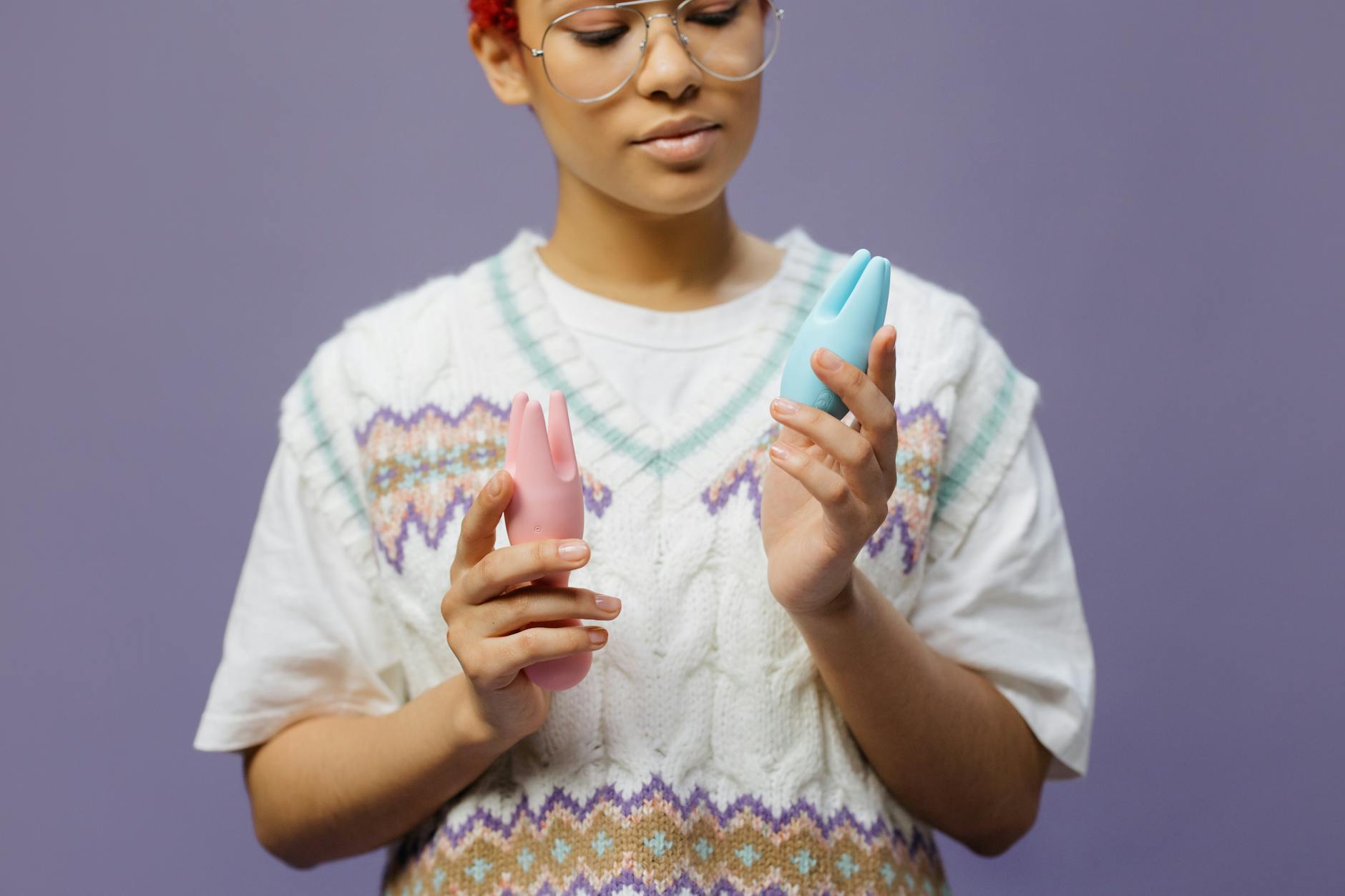
Let's talk about what happens when pleasure stops working
You've been using the same vibrator for months, maybe longer. At first, it felt incredible. Now it feels like nothing. You turn up the intensity. Still nothing. You try longer sessions. Nothing. The panic sets in: am I broken? Will I ever feel pleasure again?
You're not broken. Your nerves are just tired.
Desensitization from vibrator use is real, documented, and completely reversible. It happens because nerve endings adapt to sustained stimulation over time. The same neurons that fire with excitement eventually need a reset to respond again. The good news: that reset is possible, and it's faster than you think.
How desensitization actually happens
When you use a vibrator regularly at high intensity, your nerve endings get overstimulated. The clitoris has thousands of nerve endings packed into a tiny space. Intense, repetitive vibration floods those nerves with sensation. Your brain eventually turns down the volume to protect itself from that constant input. This is called neural habituation.
Think of it like loud music at a club. When you first arrive, the bass rattles your chest. After an hour, your ears have adapted and the volume seems normal. After three hours, you have to lean in close to hear your friend. Your hearing hasn't broken. Your nervous system has just adjusted to the new baseline.
The same thing happens with vibration. Your baseline resets higher and higher, which means you need more intensity to feel the same pleasure.
Why intensity isn't the answer
Here's where people go wrong: they assume that turning the vibrator up to maximum will solve the problem. Sometimes it feels like it works in the moment. But you're actually making the desensitization worse. Higher intensity pushes your nervous system to adapt even faster.
It's like cranking the volume on the club speakers to compete with the noise. You're not solving the problem. You're training your nerves to tune you out even more aggressively.
The real solution is stepping back completely and allowing your nerves to re-sensitize. This takes patience, but it works.
The reset protocol: how to recover sensation
I recommend a staged approach that usually takes 4 to 8 weeks depending on how long you've been desensitized.
Week 1-2: Complete rest. No vibrator use at all. This sounds harsh, but your nervous system needs to reset its baseline. Use your hands, explore touch that doesn't vibrate. Let arousal build slowly. Many people find this phase uncomfortable, but it's the foundation.
Week 3-4: Reintroduce at the lowest setting. Use your lemon vibrator on pattern 1 or 2 only. Keep sessions short, 10-15 minutes maximum. The goal isn't to orgasm. The goal is to feel sensation differently. Notice what's happening. Notice where you feel it. Slow down.
Week 5-6: Add variety and interruption. Alternate between vibrator and hands. Use the vibrator for 30 seconds, then switch to touch. This prevents your nerves from settling into habituation again. Vary the pressure, the angle, the rhythm. Keep your nervous system alert and responsive.
Week 7-8: Rebuild pleasure gradually. By now, your sensitivity should be improving. You might notice that pattern 2 or 3 feels genuinely strong again. The temptation here is to jump back to maximum. Don't. Continue varying intensity and technique. You're retraining pleasure, not chasing it.
Why a lemon clitoral vibrator works better for recovery
A lemon vibrator uses air-suction technology instead of pure vibration. This matters for desensitization recovery because the stimulation pattern is fundamentally different.
Traditional vibrators fire in one steady rhythm. A lemon clitoral vibrator creates a rhythmic pulse of suction that mimics oral stimulation. The sensation is broader and less intense at the nerve level, even at higher settings. This means you can experience stimulation without pushing your already-fatigued nerves over the edge.
Many of my clients report that switching to a lemon vibrator actually allowed them to restart their pleasure journey faster than they expected. The different sensation pattern broke the habituation cycle and gave their nervous system something new to respond to.
The patience piece (it's actually the hardest part)
Desensitization recovery requires you to slow down when all your instincts say to speed up. You've lost sensation. Your brain screams for intensity. That's where patience becomes the real tool.
I work with couples during this phase, and honestly, some of the strongest reconnection happens here. When you're not chasing orgasm, you have time to explore touch, conversation, and presence. Some partners find that the reset period actually deepens their connection because the goal shifts from performance to sensation.
Single folks often use this time to rediscover their own bodies. The pressure lifts. You're not trying to come. You're just feeling.
What not to do during recovery
Don't rely on fantasy or porn to heighten arousal during the reset phase. The goal is to retrain your body's own responses, not bypass them with external stimulation. This actually prolongs desensitization.
Don't use numbing creams or desensitizing sprays in hopes of feeling more. You're trying to wake up your nerves, not suppress them further.
Don't quit the protocol early because you're frustrated. Week 4 feels discouraging. You want to give up. Everyone does. But that's exactly when your nervous system is starting to rewire. Push through.
When sensation returns (and how it feels)
You'll notice it in small ways first. A lower setting suddenly has texture to it. You feel the pulse of the lemon vibrator instead of just pressure. Arousal builds faster. Orgasms feel sharper, more defined.
Most people report that after a full reset, their pleasure is actually richer than before. Your baseline is lower again, which means more sensation is available to you. You're not chasing the same diminishing return.
This is the point where you can maintain your gains. Use the patterns strategically instead of relying on maximum intensity constantly. Take breaks between sessions. Vary your techniques. Your nerves have learned that they can adapt. Now you're teaching them to adapt in ways that serve your pleasure.
FAQ: Common questions about vibrator desensitization
Can you permanently damage your nerves with vibrator use?
No. Nerve habituation is temporary and reversible. Your clitoral nerves are incredibly resilient. Even after months or years of desensitization, full sensation returns. There's no known case of permanent nerve damage from vibrator use in the clinical literature.
How long does it take to recover sensation after desensitization?
It typically takes 4 to 8 weeks with consistent effort. Some people recover faster, especially if they've only been desensitized for a few months. If you've been using high-intensity vibration for years, recovery might take 12 weeks. The key is consistency, not speed.
Is it normal to lose pleasure when you switch partners?
Yes, but it's usually not desensitization. It's often a combination of psychological factors, different touch preferences, and the time it takes to build arousal with someone new. If you regain sensation quickly with your own hand or a vibrator, it's likely a compatibility issue rather than physical adaptation.
Should you stop using vibrators altogether to prevent desensitization?
No. Vibrators are tools, not the enemy. Desensitization happens with repetitive high-intensity use. You prevent it by varying intensity, taking breaks, and not relying on maximum settings constantly. Strategic use actually protects your long-term pleasure.
Does desensitization happen with lemon vibrators specifically?
Yes, but typically less severely than with traditional vibrators. The air-suction sensation is different enough that it takes longer to habituate. However, if you use a lemon vibrator at maximum intensity every day for months, you can still adapt. The reset protocol still applies.
Can your partner help you recover sensation?
Absolutely. The best recovery happens when partners understand what's happening and work together on the reset protocol. Communication about what you're feeling (and not feeling) is crucial. Many couples find that this phase actually strengthens their physical and emotional connection.
The bottom line: pleasure is recoverable
Desensitization feels permanent when you're in the middle of it. You panic. You think maybe this is just how your body is now. It's not. Your nervous system is adaptable and responsive. It just needs a break and a smart reset.
Using a lemon clitoral vibrator during recovery gives you a different sensation pattern to work with while your nerves re-sensitize. Combined with the staged approach, you're usually back to strong sensation within two months.
Your pleasure matters. If it's faded, that's not a sign to give up on pleasure altogether. It's a signal to change your approach. And that change almost always brings you back to sensation that feels even better than before.
If you have questions about how to start your reset or want to discuss your specific situation, reach out to us. We're here to help you rebuild pleasure the right way.