The fear that keeps people quiet
You've been seeing someone for three weeks or eight weeks or three months. Things are good, the chemistry is there, and somewhere around the question of "what do you want" you start thinking: should I mention the vibrator?
Then the spiral starts. What if they think you don't enjoy sex with them? What if they feel replaced or insecure? What if it kills the mood? What if they think you're weird?
Here's what I see in my practice: people (often women) sit with this question for months or years, and by the time they bring it up, so much anxiety has built around it that the conversation becomes ten times harder than it ever needed to be. The vibrator becomes this loaded symbol instead of what it actually is: a tool that makes pleasure better for both of you.
What actually happens when you bring it up early
Timing matters. I'm not saying drop it on the first date. I'm saying: don't wait until you're already frustrated about your orgasm not happening, or until you've had sex fifty times and suddenly introduce it like a secret you've been keeping.
The sweet spot is usually 4-8 weeks in. You know each other well enough that you're comfortable talking about sex generally. You haven't yet locked into a pattern that feels too set in stone to shift.
When you bring it up now, here's what you're actually communicating: "I like sex with you. I also like knowing what makes my body feel good. I want to show you."
That's not a criticism of your partner. That's you taking responsibility for your own pleasure, which, by the way, is the sexiest thing you can do.
How to frame the conversation (without it becoming a thing)
Don't say: "I have this vibrator I want to try." That makes it transactional and separate.
Do say something like: "I love what we're doing. I also know my body pretty well, and there's something that makes me feel really good. I'd love to try it with you and show you what gets me there." Or: "I've been thinking about how to tell you this without it being weird. It's not weird to me, but I want to make sure it feels good for you too."
Then pause. Let them respond. Don't fill silence with apologies or backpedaling.
If they ask questions, answer directly. "Does that mean you're not happy with me?" "No. It means I'm happy and I want to feel even better. And honestly, watching you help me get there is going to be hot."
If they seem hesitant, ask: "What's making you nervous?" Often the answer is simple. They think you want them to use it on you (maybe, maybe not). They think it means you don't find them attractive (not how it works). They've never seen one and don't know what to expect.
None of those conversations are hard once you're actually having them.
The physical introduction (your first time together)
Here's where most people overthink it. You don't need to build a whole production. You don't need mood lighting and rose petals. You're not performing a scene from a movie.
Start how you normally do. Kiss, touch, enjoy each other. When things are moving and you're both aroused, that's when you mention it: "I want to show you what I like."
Then show them.
This is crucial: don't hand them the lemon vibrator and expect them to know what to do. You're using it. You're demonstrating your own pleasure, your own rhythm, your own response. Your partner's job is to be present and watch and maybe touch you in other ways while you use it.
This does two things. One, it removes the pressure on them to "use it right." Two, it lets them see that you know your body, you're not afraid of pleasure, and you're inviting them into that, not making it about them performing.
If they want to try it on you after watching you, great. You can guide them: "A little slower here," or "I like when you combine it with this." If they're not ready for that yet, don't push. The point was never for them to become an expert operator. The point was for them to see that you're serious about feeling good and that including them in that is sexy.
Why the lemon vibrator specifically works for this moment
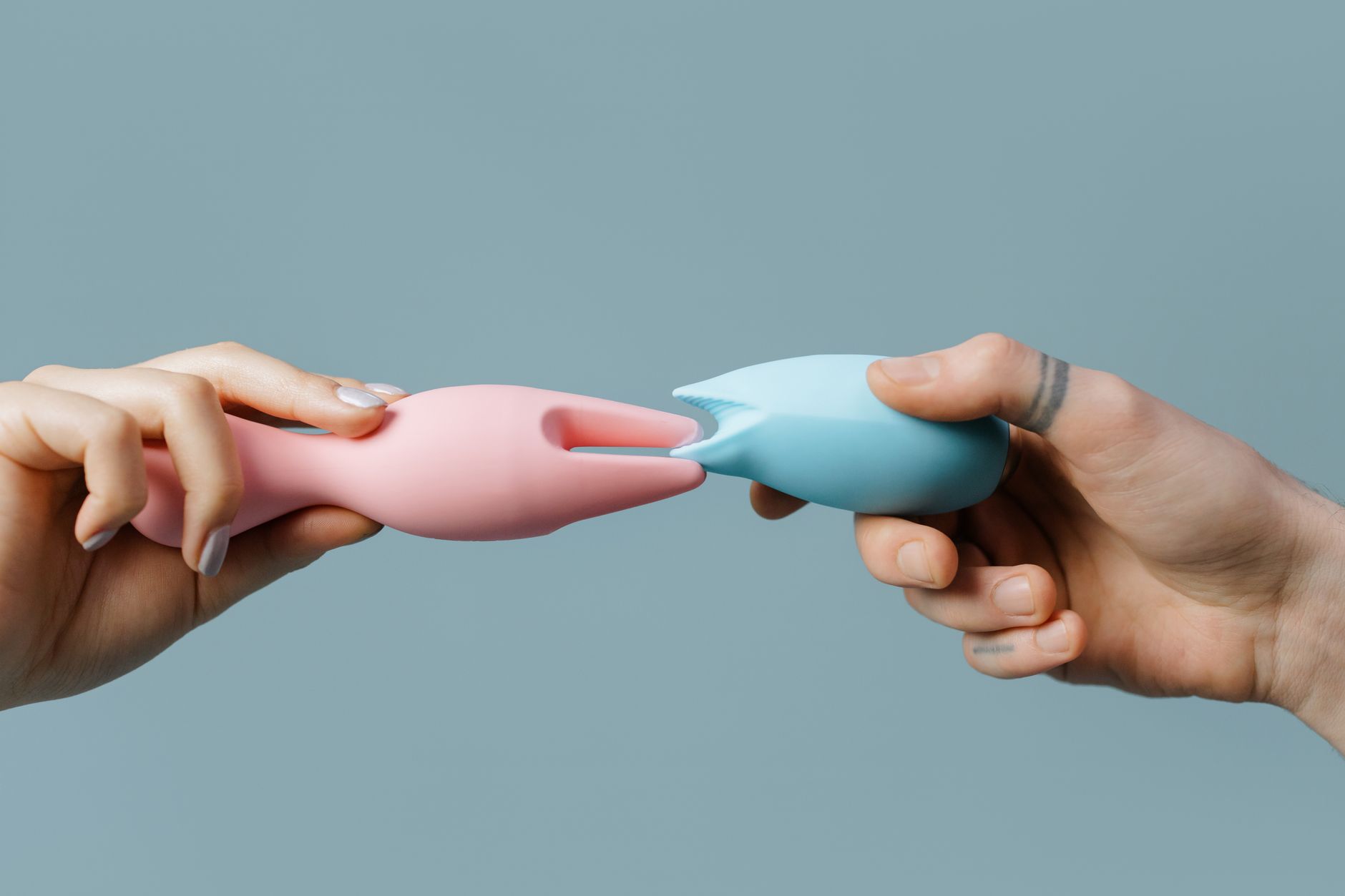
The lem (the lemon clitoral vibrator from Hallo Nancy Lemon) has a particular advantage in early-stage introductions. It's not intimidating to look at. It's compact, not a wand or a toy that looks like it requires a manual. The suction sensation is immediately noticeable but not aggressive, so the first-time experience usually feels good without requiring a learning curve.
When you're already navigating the emotional vulnerability of sharing this part of yourself, the last thing you want is a toy that feels complicated or uncomfortable to use. You want something that just works, so the focus stays on connection and pleasure, not mechanics.
The insecurity piece (his or hers or theirs)
Honestly though, the first time your partner watches you use a vibrator, something usually shifts. They see that you're not in your head. You're not self-conscious. You're just feeling good. Most partners find that incredibly hot.
But some are still in their feelings about it. If that's the case, address it head-on: "I noticed you seemed uncomfortable. What's that about?" Listen without defending yourself. Often what they're really saying is: "I want to be the one who makes you feel good," which is a reasonable thing to feel even if it's not entirely realistic.
Then you get to say: "You do make me feel good. This makes me feel good too. Both things can be true. And honestly, watching me feel good is part of making me feel good. You're still here. You're still involved."
This is where the relationship depth matters. If you're with someone who can't get past their ego about a toy, that's useful information about whether this is the right person for you long-term. I'm not being dramatic. Sexual incompatibility often starts exactly here. How your partner responds to your pleasure needs tells you a lot about how they'll respond to your needs generally.
What happens next (normalizing it)
After the first time, don't suddenly stop using it or act like it was a one-time experimental thing. Integrate it into your regular sex life like it's not a big deal, because it isn't.
You might use it sometimes. You might use it regularly. You might find that your partner wants to use it on you after a few times. You might discover other lemon sexual toys you like. The point is that it becomes a normal part of your pleasure toolkit, not a symbol or a secret.
When pleasure gets normalized early, everything else gets easier. You can ask for what you want. Your partner can ask for what they want. You're not performing; you're actually connecting.
That's the whole goal here. The vibrator is just the vehicle.
People also ask
Will introducing a vibrator too early make my new partner think I'm high-maintenance?
No. It makes them think you know yourself. That's attractive. Someone who takes their pleasure seriously usually takes everything seriously. It's confident, not demanding.
What if my partner says no or doesn't want to talk about it?
Then you get important information. If someone shuts down a mature conversation about sexuality after you've been dating for a couple of months, that's a pattern worth noting. A good partner might feel awkward at first, but they don't refuse to have the conversation.
Is it weird to use a lemon vibrator in front of a new partner?
Yes, it feels weird in your head before you do it. Once you're actually doing it, it feels natural and hot. Nervousness and excitement use the same neural pathways. You're probably going to have to feel awkward for five minutes to get to the good part.
Should I ask permission before bringing a vibrator into the bedroom?
Yes, but frame it as a conversation, not a permission slip. "I want to try something in bed with you. I think you'll like it. Can I show you?" is different from "Is it okay if I bring this toy?" One is confident and inviting. The other is apologetic.
What if they want to use it on me but I'm not comfortable with that yet?
Say so. "I want to get used to it myself first, but I like that you're interested." Then you can revisit it in a few weeks. There's no rush. You're building trust and comfort, not following a script.
Can I use a lemon clitoral vibrator with a partner who's never used toys before?
Absolutely. Actually, people often have a better first experience with a clitoral vibrator like the lem than they do with other types because the sensation is so direct and the design is so intuitive. Just go slow, check in, and remember that watching you feel good is its own kind of turn-on for most partners.
The bottom line
Introducing pleasure tools early isn't risky. Hiding your needs is. Every year I work with couples who spent decades not talking about what they actually wanted in bed because they were afraid of seeming difficult or weird. By that point, so much resentment has built up that a vibrator can't fix it.
Start now. Be honest now. Show your new partner that you're someone who knows what feels good and isn't afraid to say so. That's not demanding. That's healthy. And the right person will see it that way too.
If you're looking for more ways to build sexual confidence early in relationships, our guide on <a href="/blog/how-to-use-lemon-vibrator-to-reconnect-after-relationship-emotional-distance">reconnecting after emotional distance</a> covers what happens when that early honesty pays off over time. And if you're navigating conversations around desire, <a href="/blog/how-to-use-lemon-vibrator-with-mismatched-desire-in-relationships">understanding mismatched desire</a> gives you the framework to keep talking even when you want different things.
The tools you choose matter, sure. But the conversation you're brave enough to have matters more.