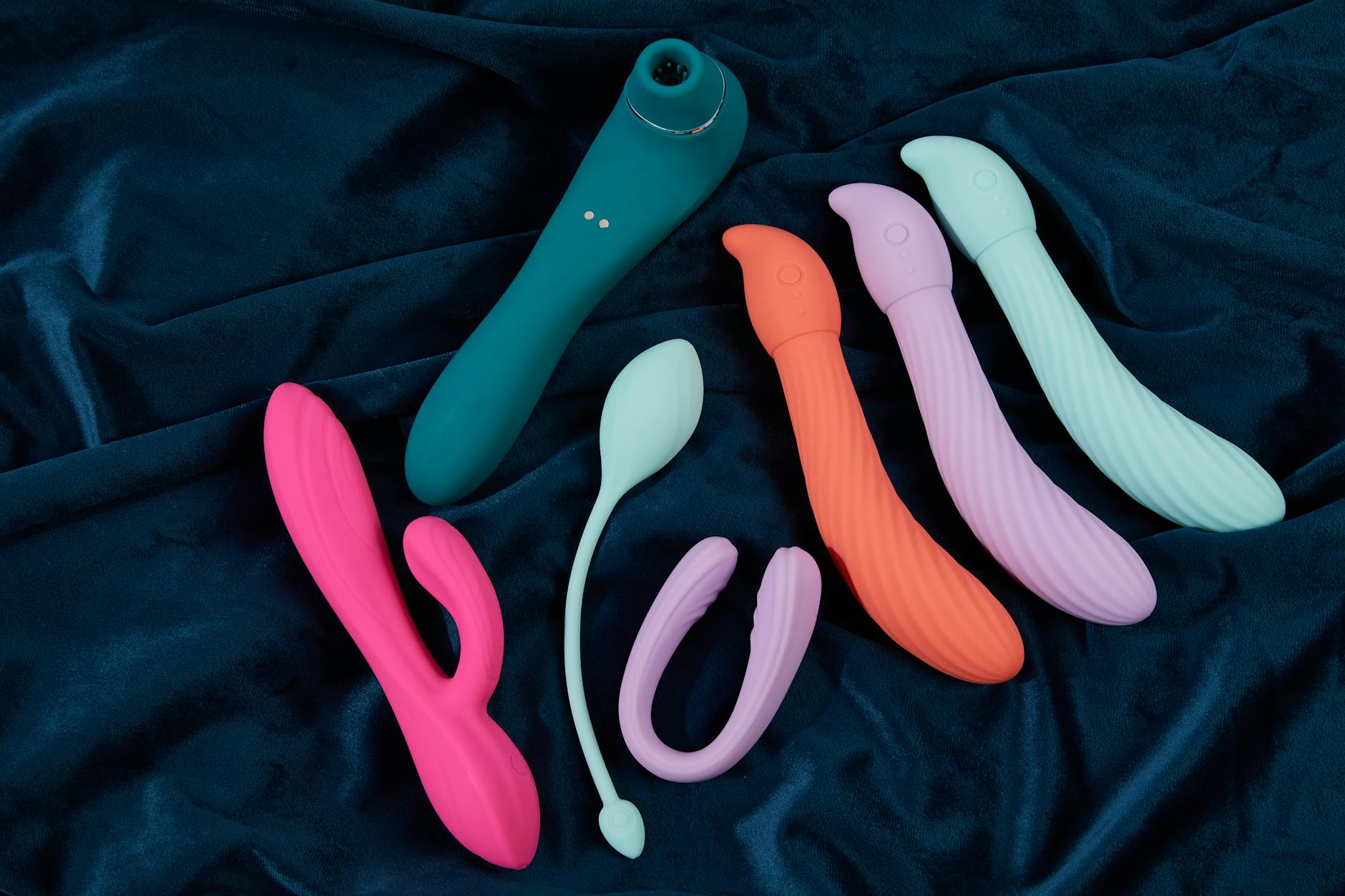
Here's what most people don't realize about their cycle
Your clitoral sensitivity changes dramatically throughout your menstrual cycle, and it's not random. Estrogen and testosterone rise and fall on a predictable schedule, which means your nerves respond differently depending on where you are in your cycle. This isn't something you're imagining. It's biology.
The problem is that most people use a lemon vibrator the exact same way every single day, then wonder why it feels amazing on Tuesday and borderline numb on Friday. You're not broken. You're just working against your body's natural rhythm instead of with it.
What actually happens to sensitivity across your cycle
Let me walk you through the four phases and what changes in each one.
Menstruation (days 1-5). Your estrogen and testosterone are at their lowest. The clitoris often feels less responsive, almost muted. Direct stimulation can feel uncomfortable or too intense for some people, while others crave stronger input. Pain sensitivity is also higher, so what felt good last week might feel sharp this week. This is when many people want either nothing at all or something very gentle and sustained.
Follicular phase (days 6-13). Estrogen and testosterone begin climbing. Your clitoral tissue becomes more engorged, nerves fire more easily, and arousal builds faster. This is often the phase where lighter settings on your lemon vibrator feel satisfying and orgasms come quickly. Your sensitivity keeps ramping up toward ovulation.
Ovulation (days 14-16). Both estrogen and testosterone peak. This is when the clitoris is most sensitive and most responsive. Light settings feel intense. Orgasms tend to be easier to reach and often feel stronger. If you ever had a moment where you thought your lemon vibrator was suddenly more powerful, you were probably ovulating.
Luteal phase (days 17-28). Progesterone rises while estrogen drops. Sensitivity declines steadily. The clitoris becomes less engorged. Arousal takes longer to build. Orgasms require more sustained effort. This is not the week for patterns 7 and 8 on your vibrator. You'll need more time, lower starting intensity, and patience.
How to match your vibrator settings to each phase
Here's the practical adjustment system I recommend to most clients using lemon clitoral vibrators.
During menstruation. Start with patterns 1-3, or skip the vibrator entirely if direct contact feels irritating. If you do use it, focus on the suction sensation rather than pattern switching. Many people find that suction alone (without switching patterns) feels less janky and more meditative during this phase. Expect to need 20-30 minutes. Your body might not be interested in orgasm, and that's completely normal.
During the follicular phase. Patterns 2-5 usually feel good. You might notice that patterns you thought were too mild suddenly become satisfying. Warm-up time shortens to 10-15 minutes. This is also when many people feel curious enough to experiment with new patterns or angles, so it's a good phase for exploration.
During ovulation. If you want intensity, this is your window. Patterns 5-8 can feel amazing right now, while patterns 1-3 might feel frustratingly underwhelming. Warm-up time can be as short as 5-10 minutes. Your body is primed for pleasure, so take advantage of that.
During the luteal phase. Treat this like menstruation in reverse. Patterns 1-4 work best. Extend your warm-up time to 20-30 minutes. You're not losing capacity. You're just working against a natural decline in hormone levels, so you need more time and lower intensity to get the same response. This is also when many people benefit from longer sessions that build slowly rather than aiming for quick orgasm.
Tracking what works so you actually remember
The challenge with cycle-based sensitivity is that you'll forget what worked two weeks ago. Your brain doesn't naturally track these patterns, which means you end up experimenting blindly every month.
I recommend one of three approaches. The simplest is a quick note in your phone on the day you try something. "Ovulation week, patterns 6-7, 8 minutes." That's it. No analysis, just data. If you use a period-tracking app, you can note vibrator settings in the notes field. The second option is to keep a small chart on your phone notes: four rows (one for each cycle phase) and four columns (warm-up time, preferred patterns, session length, notes). Update it each month.
The third option, and honestly the one that tends to work best, is to set a phone reminder for the start of each phase asking you one question: "What settings worked last month?" Then you're not relying on memory.
When sensitivity is flat or stuck across your whole cycle
Sometimes people report that their sensitivity barely shifts, or it shifted before but stopped. This is common and usually points to one of three things. Birth control can flatten hormonal fluctuation, which flattens sensation along with it. Some hormonal birth controls are more suppressive than others, so if this is you, talking to your GP about options might help.
Medication, especially SSRIs, can blunt sensation across the entire cycle regardless of where you are. If you're on antidepressants and sensitivity is flat, that's real and worth discussing with your prescriber. There are sometimes alternatives that have fewer sexual side effects.
The third reason is stress or relationship tension. Cortisol disrupts the cycle and can override the natural sensitivity fluctuations that would otherwise happen. If your cycle has always varied and suddenly stopped, look at what's shifted in your life or your relationship.
Making your partner aware without it becoming a whole thing
If you have a partner, you might be wondering whether to tell them your sensitivity shifts throughout the month. Honestly, yes, but not in an apologetic way.
Frame it as information, not a problem. "I've noticed my body responds differently depending on where I am in my cycle. Some weeks I'm in the mood for longer, slower sessions. Other weeks I want intensity quickly. It's not about you, it's about how my body works." Most partners appreciate knowing what makes sex better for both of you.
If your partner uses a lemon vibrator with you, they should also know this, because it changes what feels good to you as a recipient. If they're choosing patterns on your behalf, tell them. If you're alternating solo and partnered use, you might need different settings depending on the context.
When to see a doctor about cycle-related sensitivity changes
Most cycle-related sensitivity shifts are completely normal. But if the swings are extreme (totally numb one week, hypersensitive to the point of pain the next), or if your cycle suddenly changes its pattern, that's worth checking out.
Hormonal imbalances, PCOS, endometriosis, and thyroid issues can all change how your cycle feels and how sensitive you are. If sensation is extremely flat year-round or has recently become that way, that's also worth discussing with a menopause-informed GP. They can order simple hormone tests to see what's actually happening.
The goal isn't to "fix" anything. It's to understand your body so you can work with it instead of against it.
FAQ: Your Most Common Questions
Why does my lemon vibrator feel more intense during ovulation?
During ovulation, both estrogen and testosterone peak simultaneously. This causes the clitoral tissue to swell with blood and become more engorged, which makes nerves more responsive to stimulation. The same pattern at the same intensity will literally feel stronger because your nerve endings are primed. This is why you're not imagining the difference.
Can I use the same lemon vibrator settings every day if I track my cycle?
Yes, absolutely. Tracking helps, but most people don't need to obsess over it. The point of understanding your cycle isn't to optimize every single session. It's to know why something that felt great last week feels different this week, so you can adjust without thinking you've done something wrong. Even rough awareness (ovulation versus not ovulation) makes a huge difference.
If my cycle is irregular, how do I know when to adjust my vibrator settings?
Instead of using calendar dates, use how your body feels. Are you aroused quickly? Probably follicular phase or ovulation. Does it take forever to feel anything? Probably luteal. Once you notice these patterns in yourself, you can adjust in real time without needing a perfect cycle.
Does hormonal birth control affect how clitoral vibrators feel?
Yes, sometimes significantly. Many hormonal birth controls suppress the hormonal fluctuations that drive cycle-based sensitivity shifts. Some people on hormonal birth control report that their sensitivity stays pretty consistent all month, which actually makes life simpler. Others find their baseline sensitivity is lower overall. If you're on hormonal birth control and find your vibrator less satisfying than it used to be, that could be why.
What if one partner is cycling and one isn't? How do we use a lemon vibrator together?
Honestly, the simplest approach is to let the cycling partner be the driver. They know what their body needs and when. The non-cycling partner can ask, "What are you in the mood for today?" and adjust accordingly. This also means the cycling partner gets to tune in to their own needs rather than fitting into someone else's rhythm, which usually makes the experience better for both people.
Can I use a lemon vibrator during my period?
Yes, many people do. Some find it soothing. Others find direct clitoral contact uncomfortable during menstruation because pain sensitivity is higher and tissue can feel raw. The best approach is to listen to your body that specific day. If you want to try it, start with the lowest settings and give yourself permission to stop if it doesn't feel good. Using a lemon clitoral vibrator can also sometimes help with menstrual cramps, though the research on this is still emerging.
The real takeaway
Your lemon vibrator isn't broken. Your body isn't broken. Your sensitivity naturally shifts, and once you stop fighting that and start working with it, pleasure becomes less of a guessing game and more of something predictable you can actually enjoy. The week your vibrator suddenly feels underwhelming isn't a failure. It's your body telling you it needs something different. Listen to that.