
The thing nobody explains about arousal and your cycle
Your desire doesn't peak once a month and flatline the rest. It's more like a landscape with hills and valleys. One week you're thinking about sex at the grocery store. Two weeks later, you'd rather read. And that's not a sign something's wrong with you.
Here's what I see in my practice: most people, especially women and people with vulvas, feel broken by this variability. They think desire should be consistent. That if they're not in the mood on a given night, something is dysfunctional. The truth is wilder and better. Your arousal has a rhythm embedded in your neurochemistry, and once you learn to read it, you can actually work with it instead of against it.
How your hormonal cycle actually shapes arousal
Let's get specific. In the follicular phase (roughly days 1-14 of your cycle), estrogen is rising. This typically makes you more curious, more socially energized, and yes, more sexually responsive. Your vulva gets more blood flow. Orgasms often feel easier to reach. Your clitoral tissue is more engorged, so you might find yourself more sensitive to direct stimulation.
Then ovulation happens. For about 48 hours, testosterone spikes. This is when you might feel most boldly desirous. Not just aroused, but wanting to initiate. Wanting to be wanted.
Now the luteal phase (days 15-28). Progesterone rises, and this is where things get interesting. Many people feel less outwardly horny. But research shows that internal arousal is often higher during this phase. You just respond differently. It takes longer to warm up. You might need more emotional connection before physical pleasure clicks. And once it does, orgasms can feel deeper, more full-body.
Then menstruation arrives, hormones crash, and the whole cycle starts again.
Why this matters for how you use your lemon vibrator
A lemon clitoral vibrator is genuinely useful precisely because it offers adjustability. The Lem, for instance, has multiple patterns and intensity levels. This matters when your own responsiveness is cycling.
During your follicular phase, when you're naturally more responsive, you might gravitate toward higher intensity or faster patterns. Your tissue is plumped, your circulation is good, and you're biologically primed for direct stimulation. A higher setting on your lemon sucker isn't overkill. It's appropriate.
During your luteal phase, that same intensity might feel harsh or overstimulating. The tissue is more delicate. Your nervous system is potentially more activated (progesterone can increase baseline arousal but also baseline anxiety). This is when you might start at setting 1 or 2 and take your time. The suction pattern of a clitoral vibrator like the Lem actually becomes an advantage here because it distributes pressure differently than vibration alone.
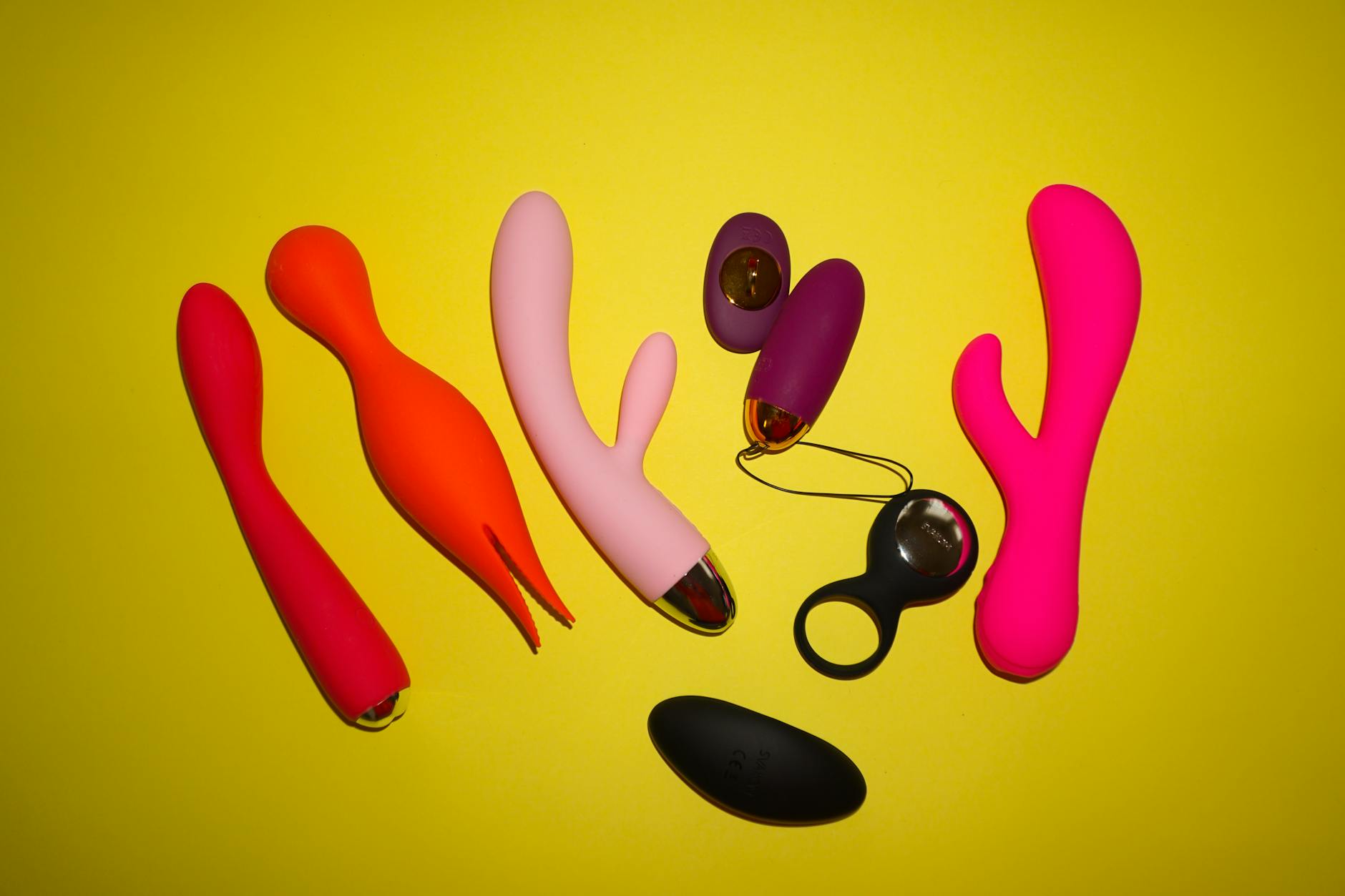
Photo by FounderTips . on Pexels
Mapping your own pattern (the part that actually changes everything)
Here's what I recommend to clients: track not just when you have your period, but when you feel most and least aroused over three cycles. Use a simple notes app or a period tracker. Write down: high arousal, medium, low. Note what you craved. Did you want speed? Gentleness? Partner touch? Alone time?
Don't do this to create a rule for yourself. Do it to gather data. After three months, a pattern usually emerges. You'll see your own landscape. And then you can actually make choices instead of just powering through.
Some people find that the first three days of menstruation feel low-arousal. Others find that menstruation itself is intensely pleasurable. Some people's arousal peaks right before ovulation. Others peak during menstruation. There is no universal pattern, which means generic advice is almost useless. Your personal data is everything.
The emotional layer nobody mentions
Hormones aren't the only thing cycling. So is your emotional bandwidth. During high-stress work weeks, arousal often tanks regardless of cycle phase. During weeks when your relationship feels connected and playful, arousal rises.
This is why I often see people confusing a relationship problem with a hormonal one. You might think, "My desire has dropped," when what's actually happening is: "We haven't had a real conversation in two weeks, I'm managing his emotions instead of sharing mine, and I'm exhausted."
Or the inverse: sometimes a cycle phase that's usually low-arousal becomes high-arousal because something in your life shifted. You got the job. Your partner finally heard you. Something cracked open.
The lemon vibrator doesn't solve that. But it does give you consistent access to your own pleasure independent of all of it. It's a constant. Your arousal may fluctuate. Your access to sensation doesn't have to.
The practical setup for inconsistent months
Four things that actually help:
One: keep your lemon vibrator accessible. Not hidden. Not locked away. Out in a drawer where you can grab it without ceremony. Friction kills spontaneity. If you have to hunt for it when you feel the spark, the spark dies.
Two: experiment with timing. If your data shows that your luteal phase arousal is slower, you might plan for solo sessions during that time. Not because you're broken, but because you know what conditions help you. Same with partnered sex. If you know your follicular phase is your "yes, immediately" phase, that's when you might lean into faster escalation.
Three: adjust intensity consciously. Don't just accept that one setting should work all month. Change it. Your lemon clitoral vibrator is designed with this in mind. The multiple intensity levels exist because bodies aren't static.
Four: separate arousal from obligation. This is the hard one. If your arousal is low this week, that doesn't mean you have to push through it with a vibrator. It might mean you need connection. Or rest. Or a different kind of touch. The vibrator is a tool for pleasure when pleasure is actually possible, not a workaround for ignored intimacy needs.
What to do when your partner doesn't understand the variability
Honestly? Talk about it before you're in bed. Not in the moment when desire is low and someone is confused about why. Say: "My arousal shifts throughout my cycle. This is normal. Here's what helps me during this phase."
For many partners, understanding this removes the sting. They might have internalized that inconsistent desire means you're not into them. Knowing it's a cycle thing is actually a relief. And knowing that you have tools, that you're resourceful enough to meet yourself where you are, makes them feel less responsible for fixing something that isn't broken.
If your partner resists this or makes you feel bad about the variability, that's a different conversation. But most people, once they understand what's actually happening, become genuinely supportive.
People also ask
Can arousal variability mean something is medically wrong?
Sometimes. Thyroid imbalance, depression, medication side effects, and relationship stress all affect arousal. But healthy, hormone-cycling people have naturally variable desire. The distinction matters. If your variability follows your cycle consistently, you're likely fine. If arousal suddenly flatlines across all cycle phases, that's worth a doctor visit. If it shifts with major life stress or relationship changes, that's information about your life, not your body.
How do lemon vibrators compare to other clitoral vibrators for cycle-related changes?
The suction mechanism of a lemon clitoral vibrator distributes pressure differently than traditional vibration. Some people find suction less harsh on sensitive or delicate tissue during the luteal phase, which is why air-suction toys like the Lem are useful when sensation varies. But honestly, the best vibrator is the one you like using. If you prefer a different clitoral vibrator, use that. The point is adjustability and listening to your body.
Should I use my lemon vibrator differently during menstruation?
You can, but you don't have to. Some people find that masturbation with a vibrator during menstruation feels amazing because blood flow is high and tissue sensitivity changes. Others prefer to skip it. There's no rule. Pay attention to what feels good versus what feels obligatory.
What if my arousal is low during phases when it's usually high?
That's information. Something shifted. Could be stress, could be relationship stuff, could be medication, could be sleep debt. Don't just assume your cycle is broken. Look at your actual life. What's different? Sometimes the answer is obvious. Sometimes you need to sit with it. And sometimes you reach out to a therapist or doctor.
Is it normal to feel aroused at random times that don't match my cycle?
Completely. Arousal is responsive to context too. You see someone attractive. A conversation turns you on. You read something that clicks. The cycle provides a baseline, but your actual life and thoughts are constantly modulating it. Tracking your cycle phase helps you understand one layer, but you're not a robot following a preset pattern.
How do I talk to a partner about my arousal cycle without making them feel rejected?
Lead with information, not apology. "I've noticed my arousal peaks here and dips there. It's not about you. It's my cycle. When I'm in a dip, here's what actually helps." Most people respond well to clarity and a sense that you're managing it, not asking them to manage it for you. And honestly, once partners understand this, many feel relieved. They're no longer responsible for your arousal. You are.
Your arousal isn't broken. It's just not linear. And that's not a flaw in how you're built. It's actually adaptive. Once you stop fighting it and start reading it, sex becomes less of a performance and more of an actual conversation with your own body. A lemon vibrator is just a tool in that conversation. The real work is learning to listen.