Let's talk about what nobody tells you
Hormonal birth control works by changing how your body signals arousal. The pill, the patch, the ring, the implant. They all suppress the hormonal surges that tell your nervous system "pay attention to this." Which is great for preventing pregnancy. Which can be terrible for pleasure.
Most people on hormonal birth control experience some degree of sensation dampening. Not everyone. Not catastrophically in every case. But the connection between lowered testosterone and reduced clitoral responsiveness is real, documented, and worth understanding.
Here's what happens, and what lemon clitoral vibrators have to do with fixing it.
How hormonal birth control changes your body
The mechanisms are straightforward. Hormonal contraceptives suppress testosterone production. Testosterone directly affects clitoral tissue sensitivity, libido, and the speed at which arousal builds. When it drops, arousal takes longer to initiate, clitoral sensation feels muted, and orgasm (if it arrives) can feel distant or weak.
This doesn't mean your clitoris is broken. It means your nervous system is receiving a weaker signal. The nerves are fine. The tissue is fine. The transmission is just turned down.
Some people also report that lubrication changes, that their baseline sense of desire shifts, or that mental arousal becomes harder to access. This can be hormonal, but it's also often psychological. If you know rationally that your body is less responsive, you might unconsciously guard against disappointment.
Why lemon vibrators work particularly well here
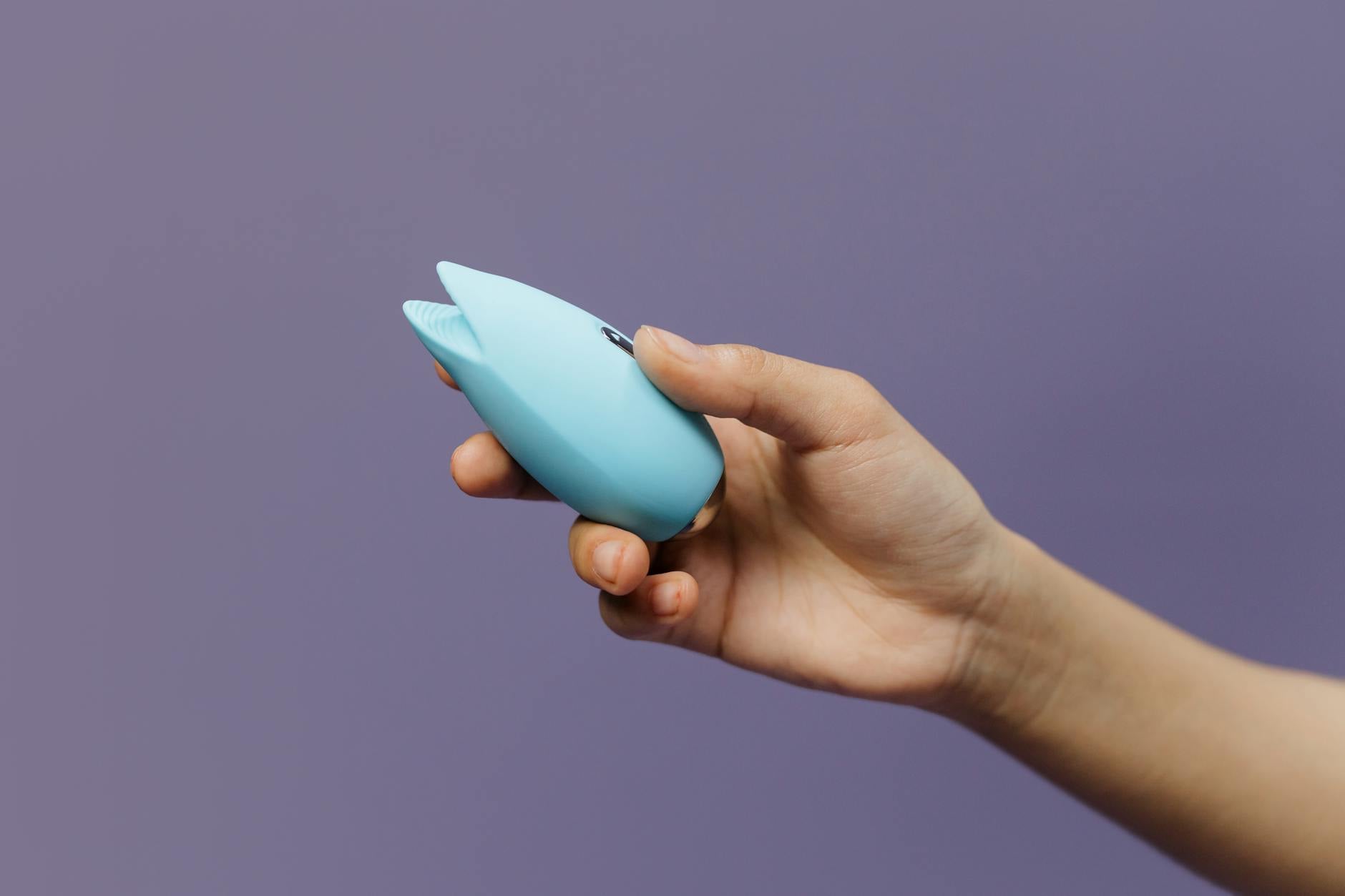
Lemon clitoral vibrators, particularly air-suction designs, bypass some of the hormonal dampening by delivering stimulation that doesn't depend on your body's natural arousal cascade. Instead of waiting for your hormones to signal "wake up," the suction creates a direct neural response.
This is not the same as natural arousal, and it's not meant to be. Think of it as a translation tool. Your body is speaking quieter under hormonal contraception. The lemon vibrator listens more carefully and turns the volume up.
Unlike traditional vibrators that rely on frequency and friction, air-suction technology stimulates the thousands of nerve endings in the clitoris through gentle pressure waves. For people whose sensation has been dampened by hormones, this different pathway often feels more accessible.
The sensitivity rebuild process
Here's what I see clinically when someone returns to pleasure after hormonal dampening:
Week one to two. Most people using a lemon vibrator for the first time after noticing sensation loss report immediate surprise. Not necessarily intense pleasure, but recognition. "Oh, I can feel that again." The clitoris has not forgotten how to respond. It's just been receiving a muted signal.
Week two to four. Consistent use starts to retrain the nervous system. You're essentially reminding your body that sensation is possible, safe, and worth paying attention to. Many people report that non-toy arousal also begins to improve during this window.
Month two onward. The real shift happens here. Baseline sensitivity improves. Natural arousal becomes more accessible. Some people find they can orgasm more easily with the toy, and increasingly with partners or solo without it.
This isn't guaranteed for everyone. Hormonal contraception's effects vary wildly between individuals. But the pattern is consistent enough that it's worth paying attention to.
Practical timing and technique
If you're on hormonal birth control and noticing reduced clitoral sensitivity, a few adjustments make lemon clitoral vibrators much more effective.
Start in low arousal states. Many people assume they should wait until they're already turned on. Actually, the opposite is true. Using a lemon vibrator when you're not particularly aroused trains your nervous system to recognize and respond to the stimulus. Once your body remembers the sensation, arousal becomes easier.
Use it consistently, not desperately. The worst approach is waiting until you're frustrated that nothing is working, then attacking yourself with maximum intensity. Instead, light, regular engagement. Five to ten minutes, three to five times a week. Your nervous system learns through repetition, not pressure.
Understand the warm-up. Hormonal birth control often extends the time it takes for clitoral tissue to engorge and become fully responsive. Build in an extra ten minutes before using the lemon vibrator. Self-touch, partner touch, mental focus. Anything that signals arousal to your body.
Water-based lubricant, always. Hormonal contraception can change natural lubrication. Adding a water-based lube isn't admitting failure. It's removing friction that would otherwise interfere with the vibrator's suction effect.
The conversation with your doctor
If sensation loss is significantly affecting your quality of life or partnered pleasure, bring it up with your prescriber. Not all hormonal contraceptives have identical effects on sensation. Some people find that switching methods helps. Others discover that a lower-dose pill, or a different formulation entirely, restores more sensitivity while maintaining contraceptive protection.
There's also the option of combining methods. Some people stay on hormonal birth control for reliability but add supplemental testosterone (prescribed and monitored) to restore sensation and libido. This is less common in the US than in Europe, but it's available and worth discussing.
If switching methods isn't an option or isn't the problem, lemon vibrators often bridge the gap more effectively than traditional vibrators because of how they work neurologically. But your doctor should know you're experiencing this.
When to expect real change
Don't expect a month of lemon vibrator use to fully reverse years of hormonal dampening. But do expect noticeable changes within four to six weeks of consistent use.
You'll likely notice: orgasms arriving more reliably, sensation feeling less distant, baseline arousal improving even outside of toy use, and partnered pleasure becoming more accessible. Some people also report that their sense of sexual agency shifts. When you remember that your body is capable of real sensation, sex stops feeling like something you tolerate and starts feeling like something you want.
That shift matters. It's not trivial. And a lot of it starts with recognizing that the dampening is real, choosing to address it, and using tools like lemon clitoral vibrators strategically.
The reality check
Hormonal birth control is often the right choice. Reliable contraception matters. But that doesn't mean accepting sensation loss as inevitable. Your pleasure is not a luxury add-on. It's part of your sexual health. If hormonal contraception is muting your sensation, that's worth naming, worth investigating, and worth taking action about.
Lemon vibrators are one very effective part of that solution. They work because they respect how your body actually responds under hormonal influence, rather than demanding it respond the old way.
People also ask
Can hormonal birth control permanently reduce clitoral sensitivity?
No. The dampening is a side effect of active hormonal suppression. When you stop hormonal contraception, sensation typically returns over weeks to months as testosterone levels normalize. However, the longer you've been on hormonal methods, the longer the adjustment period may take. Using lemon vibrators during that adjustment can speed up the reconnection process.
Will using a lemon vibrator while on birth control make my sensation worse?
Not at all. The vibrator doesn't interfere with your contraception, and it doesn't worsen the hormonal effects. If anything, consistent use helps your nervous system maintain its sensitivity. You're exercising that pathway, essentially, which keeps it more responsive even when your baseline hormones are lower.
How do I know if my sensation loss is from birth control or something else?
The easiest test is timing. If you started hormonal contraception and noticed sensation changes shortly after, it's almost certainly the method. If sensation loss developed over months while on the same method, or if it's accompanied by pain, numbness that doesn't respond to stimulation, or other symptoms, talk to your doctor. Those patterns suggest something different may be happening.
Can I use a lemon vibrator immediately after starting birth control?
Absolutely. In fact, many people find that establishing a positive relationship with tools like lemon clitoral vibrators early in hormonal contraception helps them adapt better. You're not waiting for damage to accumulate. You're staying connected to your pleasure from the start.
Does every type of hormonal birth control cause the same sensitivity changes?
No. Different methods have different hormonal profiles, and sensitivity effects vary between individuals. Some people on the pill experience noticeable changes. Others on the same dose report nothing. The implant and IUS (which release hormones locally) may have different effects than systemic methods. If one method is dampening your sensation, another might not.
What if lemon vibrators aren't helping my sensitivity?
If you've used a lemon clitoral vibrator consistently for six to eight weeks and sensation isn't improving, that's worth discussing with your doctor. It could mean your body responds better to a different method, that something else is affecting sensation, or that your specific hormonal profile needs a different approach. Don't assume your pleasure is just going to stay muted. There are usually solutions.
Next steps
If hormonal birth control has dampened your sensation, you don't have to live with it. Understanding that it's hormonal gives you agency. Starting with a lemon vibrator gives you a practical tool. And talking to your doctor about how it's affecting you gives you options.
Your pleasure matters. Your sensation matters. And sensitivity lost to hormones can almost always be restored with the right approach, the right tool, and a little patience. Reach out if you want to talk through what might work best for your body. We're here to help.